• Home
  • Search
  • Browse Collections
  • My Account
  • About
  • DC Network Digital Commons Network™
Skip to main content
Digital Commons @ University of South Florida
  • USF Home
  • USF Research
  • USF Libraries

Digital Commons @ USF > USF Libraries > USF Digital Collections > Tampa Digital Collections > Tampa Special Collections > Arts and Humanities > Art and Art History

Art and Art History Collection (Saskia)
 

Art and Art History Collection (Saskia)

The Art and Art History Collection from Saskia Ltd., Cultural Documentation features a wide range of digital images with an emphasis on the history of Western art. There are 3,645 images in this collection. Image sets include: The Dresden Collection, Brueghel and Rubens, Ancient Greek Art (Architecture and Sculpture), Ancient Art (Minoan and Roman), Roman Art, Michelangelo, Italian Renaissance, Realism, Impressionism, Post-Impressionism, and Contemporary Architecture. Images from art history textbooks include: Gardner, Expanded Gardner, Stokstad, Gilbert, Hartt, Cunningham, and Reich.

Access note: Only thumbnail images and descriptive information are available to non-USF users. Full access to this collection is available only to authorized users on the USF network on campus or via VPN. For more information or to report technical issues please contact us.

Printing is not supported at the primary Gallery Thumbnail page. Please first navigate to a specific Image before printing.

Follow

Switch View to Grid View Slideshow
 
  • Assumption of the Virgin by Unknown

    Assumption of the Virgin

    Unknown

  • A Woman with Braided Blond Hair by Unknown

    A Woman with Braided Blond Hair

    Unknown

    Helena was to inspire some of the most personal and poignant portraits of Rubens' later career, and their marriage was as fruitful as it was blissful, producing five children. Rubens often identified Helena with the goddess Venus. The art of Peter Paul Rubens is a fusion of the traditions of Flemish realism with the classicizing tendencies of the Italian Renaissance. Rubens was able to infuse his own astounding vitality into a powerful and exuberant style that came to epitomize the Baroque art of the 17th century.

  • Pilgrim Church of Vierzehnheiligen by Unknown

    Pilgrim Church of Vierzehnheiligen

    Unknown

    Overall view of Nave and Chapel

  • A Woman with Braided Blond Hair by Unknown

    A Woman with Braided Blond Hair

    Unknown

    Helena was to inspire some of the most personal and poignant portraits of Rubens' later career, and their marriage was as fruitful as it was blissful, producing five children. Rubens often identified Helena with the goddess Venus. The art of Peter Paul Rubens is a fusion of the traditions of Flemish realism with the classicizing tendencies of the Italian Renaissance. Rubens was able to infuse his own astounding vitality into a powerful and exuberant style that came to epitomize the Baroque art of the 17th century.

  • Wild Boar Hunt by Unknown

    Wild Boar Hunt

    Unknown

    Hunters, wild boar, dogs

  • Wild Boar Hunt by Unknown

    Wild Boar Hunt

    Unknown

    Wild boar, dogs, brushwork

  • The Old Woman with the Glowing Coals by Unknown

    The Old Woman with the Glowing Coals

    Unknown

    Face of old woman

  • Wild Boar Hunt by Unknown

    Wild Boar Hunt

    Unknown

  • The Old Woman with the Glowing Coals by Unknown

    The Old Woman with the Glowing Coals

    Unknown

  • Judgment of Paris by Unknown

    Judgment of Paris

    Unknown

    Hera, Athena, Aphrodite

  • Judgment of Paris by Unknown

    Judgment of Paris

    Unknown

    Paris, Mercury

  • Judgment of Paris by Unknown

    Judgment of Paris

    Unknown

  • Bathsheba at the Fountain Receiving King David's Letter (detail) Bathsheba at the Fountain by Unknown

    Bathsheba at the Fountain Receiving King David's Letter (detail) Bathsheba at the Fountain

    Unknown

    Between 1623 and 1631, Rubens traveled frequently on diplomatic missions, visiting London and Madrid, where he received peerages from both Charles I of England and Philip IV of Spain. Isabella Brant died in 1626; in 1630 Rubens married the 16-year-old Helene Fourment, who sat for many portraits and other works, " Bathsheba at the Fountain" is one. The twilight decade of 1630

  • Bathsheba at the Fountain Receiving King David's Letter (detail) Bathsheba at the Fountain by Unknown

    Bathsheba at the Fountain Receiving King David's Letter (detail) Bathsheba at the Fountain

    Unknown

    Between 1623 and 1631, Rubens traveled frequently on diplomatic missions, visiting London and Madrid, where he received peerages from both Charles I of England and Philip IV of Spain. Isabella Brant died in 1626; in 1630 Rubens married the 16-year-old Helene Fourment, who sat for many portraits and other works, " Bathsheba at the Fountain" is one. The twilight decade of 1630

  • Bathsheba at the Fountain Receiving King David's Letter (detail) Bathsheba at the Fountain by Unknown

    Bathsheba at the Fountain Receiving King David's Letter (detail) Bathsheba at the Fountain

    Unknown

    Between 1623 and 1631, Rubens traveled frequently on diplomatic missions, visiting London and Madrid, where he received peerages from both Charles I of England and Philip IV of Spain. Isabella Brant died in 1626; in 1630 Rubens married the 16-year-old Helene Fourment, who sat for many portraits and other works, " Bathsheba at the Fountain" is one. The twilight decade of 1630

  • Bathsheba at the Fountain Receiving King David's Letter Bathsheba at the Fountain by Unknown

    Bathsheba at the Fountain Receiving King David's Letter Bathsheba at the Fountain

    Unknown

    Between 1623 and 1631, Rubens traveled frequently on diplomatic missions, visiting London and Madrid, where he received peerages from both Charles I of England and Philip IV of Spain. Isabella Brant died in 1626; in 1630 Rubens married the 16-year-old Helene Fourment, who sat for many portraits and other works, " Bathsheba at the Fountain" is one. The twilight decade of 1630

  • Love Festival by Unknown

    Love Festival

    Unknown

    Couples (lovers) on the grass

  • Love Festival by Unknown

    Love Festival

    Unknown

  • Reclining Venus with Amor by Unknown

    Reclining Venus with Amor

    Unknown

  • Maria Josepha, Dauphine of France by Unknown

    Maria Josepha, Dauphine of France

    Unknown

  • Count Moritz of Saxony, Field Marshal of France (detail) Maurice, Comte de Saxe, Marshal of France by Unknown

    Count Moritz of Saxony, Field Marshal of France (detail) Maurice, Comte de Saxe, Marshal of France

    Unknown

    January 1747 Louis appointed Saxe marshal general of France. In 1747 he invaded Holland, defeated an allied army in the Battle of Lauffeld near Maastricht (July 2), and captured the fortress of Bergen-Op-Zoom. Saxe retired to his ch

  • Count Moritz of Saxony, Field Marshal of France Maurice, Comte de Saxe, Marshal of France by Unknown

    Count Moritz of Saxony, Field Marshal of France Maurice, Comte de Saxe, Marshal of France

    Unknown

    La Tour was a pastelist whose animated and sharply characterized portraits made him one of the most successful and imitated portraitists of 18th-century France.

  • The Drunken Silenus, mon (detail) Drunken Silenus supported by Satyrs by Unknown

    The Drunken Silenus, mon (detail) Drunken Silenus supported by Satyrs

    Unknown

    Silenus was the teacher and companion of Bacchus, the god of wine; he is often shown supported by satyrs because of his age and drunken condition. At the lower right two putti offer him grapes, while above them an old Bacchante carries a torch. On the left a figure playes pipes, and a young Bacchante squeezes grapes over Silenus. The painting is thought to have been executed in Rubens' studio. The sky and landscape are probably by Jan Wildens, and the foliage and fruit by Frans Snijders. The design of the figures may have been executed by a member of the studio, possibly Van Dyck, and then reworked by Rubens himself.

  • The Drunken Silenus, mon (detail) Drunken Silenus supported by Satyrs by Unknown

    The Drunken Silenus, mon (detail) Drunken Silenus supported by Satyrs

    Unknown

    Silenus was the teacher and companion of Bacchus, the god of wine; he is often shown supported by satyrs because of his age and drunken condition. At the lower right two putti offer him grapes, while above them an old Bacchante carries a torch. On the left a figure playes pipes, and a young Bacchante squeezes grapes over Silenus. The painting is thought to have been executed in Rubens' studio. The sky and landscape are probably by Jan Wildens, and the foliage and fruit by Frans Snijders. The design of the figures may have been executed by a member of the studio, possibly Van Dyck, and then reworked by Rubens himself.

  • The Drunken Silenus, mon Drunken Silenus supported by Satyrs by Unknown

    The Drunken Silenus, mon Drunken Silenus supported by Satyrs

    Unknown

    Silenus was the teacher and companion of Bacchus, the god of wine; he is often shown supported by satyrs because of his age and drunken condition. At the lower right two putti offer him grapes, while above them an old Bacchante carries a torch. On the left a figure playes pipes, and a young Bacchante squeezes grapes over Silenus. The painting is thought to have been executed in Rubens' studio. The sky and landscape are probably by Jan Wildens, and the foliage and fruit by Frans Snijders. The design of the figures may have been executed by a member of the studio, possibly Van Dyck, and then reworked by Rubens himself.

  • King Louis XIV of France. State Portrait by Unknown

    King Louis XIV of France. State Portrait

    Unknown

    Half length portrait

  • King Louis XIV of France. State Portrait by Unknown

    King Louis XIV of France. State Portrait

    Unknown

    Hermine lined robe, sword of Charlemagne

  • King Louis XIV of France. State Portrait by Unknown

    King Louis XIV of France. State Portrait

    Unknown

  • L'Indifferent by Unknown

    L'Indifferent

    Unknown

  • The Peasant Family (detail) Family of Country People by Unknown

    The Peasant Family (detail) Family of Country People

    Unknown

    It is still not known precisely which of the three Le Nain brothers (most probably Louis or Antoine) was the author of a series of paintings with peasant subjects. The series is prominent among Western art of the genre, for its exceptional quality and solemnity, its muted colours and the austere dignity of the figures, fixed in their attentive, stilled poses. This scene, the largest of the series, has the universality of a classical text. Wine and bread are given a emphasis that is redolent with symbolism. The Louvre has two paintings depicting peasant families by Le Nain, one of them is an austere and virile work. This one, however, strikes a note of profound intimacy, a warmth of spirit, like the atmosphere of a domestic festivity.

  • The Consequences of War by Unknown

    The Consequences of War

    Unknown

    Close detail of twisted bodies

  • The Peasant Family Family of Country People by Unknown

    The Peasant Family Family of Country People

    Unknown

    The general harmony of greys and browns is in keeping with the spirit of austerity reigning in French painting in the time of Louis XIII. Unlike the Flemings, who made their scenes of rustic life an occasion for depicting the unleashing of the coarsest sensual instincts, Louis Le Nain saw in the peasant soul a profound gravity, even solemnity; the expression of a life of toil whose hard realities have bestowed on it a sense of its own dignity. The paint quality is flowing and rich, with touches of impasto used not simply for effect, as in the work of Frans Hals, but giving proof of a sensitive brush, searching out the modelling with attention and feeling.

  • The Consequences of War by Unknown

    The Consequences of War

    Unknown

    Close-up detail of feet stepping on book

  • The Consequences of War by Unknown

    The Consequences of War

    Unknown

    Close detail of woman on the left

  • The Consequences of War by Unknown

    The Consequences of War

    Unknown

    Close detail of soldier at right center

  • The Consequences of War by Unknown

    The Consequences of War

    Unknown

    Close-up detail of woman and soldier

  • The Consequences of War by Unknown

    The Consequences of War

    Unknown

    Detail at left center with nude woman and soldier
  • The Consequences of War by Unknown

    The Consequences of War

    Unknown

  • Adoration of the Shepherds by Unknown

    Adoration of the Shepherds

    Unknown

  • The Benediction (detail) by Unknown

    The Benediction (detail)

    Unknown

    The topic is the prayer preceding the meal, treated by the Dutch Masters of the 18th century, is reinterpreted in this scene filled with tenderness and reserve. This is one of most famous works of Chardin. His technical skill gave his paintings an uncannily realistic texture. He rendered forms by means of light by using thick, layered brushstrokes and thin, luminous glazes. Called the grand magician by critics, he achieved a mastery in these areas unequaled by any other 18th-century painter. Chardin's early support came from aristocratic patrons, including King Louis XV.

  • The Benediction by Unknown

    The Benediction

    Unknown

    The topic is the prayer preceding the meal, treated by the Dutch Masters of the 18th century, is reinterpreted in this scene filled with tenderness and reserve. This is one of most famous works of Chardin. His technical skill gave his paintings an uncannily realistic texture. He rendered forms by means of light by using thick, layered brushstrokes and thin, luminous glazes. Called the grand magician by critics, he achieved a mastery in these areas unequaled by any other 18th-century painter. Chardin's early support came from aristocratic patrons, including King Louis XV.

  • Marie de'Medici Series VI: Debarkation at Marseille by Unknown

    Marie de'Medici Series VI: Debarkation at Marseille

    Unknown

    Nymphs at lower center

  • Marie de'Medici Series VI: Debarkation at Marseille by Unknown

    Marie de'Medici Series VI: Debarkation at Marseille

    Unknown

    Marie de'Medici debarking in Marseille

  • King Charles I of England as a Hunter (detail) Charles I: King of England at the Hunt by Unknown

    King Charles I of England as a Hunter (detail) Charles I: King of England at the Hunt

    Unknown

    In 1632, Charles I invited Van Dyck to England to be a court painter. He was knighted, rewarded with the generous annuity of

  • Marie de'Medici Series VI: Debarkation at Marseille by Unknown

    Marie de'Medici Series VI: Debarkation at Marseille

    Unknown

  • Et in Arcadia Ego (detail) by Unknown

    Et in Arcadia Ego (detail)

    Unknown

    In this version all sense of surprise has been removed, and instead, the shepherds are arranged in attitudes of contemplation round the tomb in the countryside. The artist has lost all interest in story-telling, and has concentrated on a totally static scene. No pleasure is taken in surface texture, and the whole is hard and cold, with the figures in statuesque poses.

  • King Charles I of England as a Hunter Charles I: King of England at the Hunt by Unknown

    King Charles I of England as a Hunter Charles I: King of England at the Hunt

    Unknown

    In 1632, Charles I invited Van Dyck to England to be a court painter. He was knighted, rewarded with the generous annuity of

  • Et in Arcadia Ego by Unknown

    Et in Arcadia Ego

    Unknown

    Shepherds are seen before a tomb deciphering the inscription with an air of melancholy curiosity. The skull is no longer significant or is omitted. The words seem to imply an epitaph on the person, perhaps a shepherdess, who lies entombed: 'I too once lived in Arcady', an alteration to the meaning that somewhat stretches the grammar of the original Latin.In this version all sense of surprise has been removed, and instead, the shepherds are arranged in attitudes of contemplation round the tomb in the countryside. The artist has lost all interest in story-telling, and has concentrated on a totally static scene. No pleasure is taken in surface texture, and the whole is hard and cold, with the figures in statuesque poses.

  • Pilgrimage to Cythera by Unknown

    Pilgrimage to Cythera

    Unknown

    Couple dancing

  • Pilgrimage to Cythera by Unknown

    Pilgrimage to Cythera

    Unknown

    Couple with dog

  • Pilgrimage to Cythera by Unknown

    Pilgrimage to Cythera

    Unknown

    Couple at right, garment

  • Pilgrimage to Cythera by Unknown

    Pilgrimage to Cythera

    Unknown

    Couple at statue

  • Pilgrimage to Cythera by Unknown

    Pilgrimage to Cythera

    Unknown

    Couples embarking

  • Pilgrimage to Cythera by Unknown

    Pilgrimage to Cythera

    Unknown

    Three central couples

  • Pilgrimage to Cythera by Unknown

    Pilgrimage to Cythera

    Unknown

  • Et in Arcadia Ego by Unknown

    Et in Arcadia Ego

    Unknown

    'Et in Arcadia ego' is a phrase coined by Virgil and used in 17th century Italy expressing, in an elliptical way, the humanistic sentiment: Even in Arcadia I (i.e. Death) am to be found. That is to say, even the escapist, pastoral world of Arcady is no refuge from death. The words feature in paintings from that time inscribed on monumental stonework, especially a tomb, which stands in rural surroundings. The earliest representation of the theme by Guercino (Galleria Corsini, Rome) shows two shepherds coming unexpectedly upon a skull - the typical memento mori - that lies on a piece of fallen masonry bearing the words 'Et in Arcadia ego'.

  • Milo of Cortona Devoured by a Lion by Unknown

    Milo of Cortona Devoured by a Lion

    Unknown

    Total front center

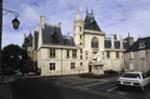
  • ChGteau de Blois by Unknown

    ChGteau de Blois

    Unknown

    Courtyard fatade from the left
  • ChGteau de Blois by Unknown

    ChGteau de Blois

    Unknown

    Det: courtyard portal from the left
  • ChGteau de Blois by Unknown

    ChGteau de Blois

    Unknown

    Det: tower of Louis XII wing

  • ChGteau de Blois by Unknown

    ChGteau de Blois

    Unknown

    Det: roof dormers & spiral staircase

  • ChGteau de Blois by Unknown

    ChGteau de Blois

    Unknown

    Det: elaborate roof dormers

  • ChGteau de Blois by Unknown

    ChGteau de Blois

    Unknown

    Close det: spiral staircase

  • ChGteau de Blois by Unknown

    ChGteau de Blois

    Unknown

    Wing of Francois I (1515-24), courtyard fatade, with spiral staircase tower, from S

  • ChGteau de Blois by Unknown

    ChGteau de Blois

    Unknown

    Wing of Louis XII, late 15th c.. Courtyard from the W, closer view

  • ChGteau de Blois by Unknown

    ChGteau de Blois

    Unknown

    Wing of Louis XII, General Courtyard view from W

  • Palace of Versailles by Unknown

    Palace of Versailles

    Unknown

    Hall of Mirrors, raking view of exterior wall w windows and candelabras

  • Palace of Versailles by Unknown

    Palace of Versailles

    Unknown

    Hall of Mirrors, 1678-79. Det: mirrors, pilasters, decorative elements

  • Palace of Versailles by Unknown

    Palace of Versailles

    Unknown

    Hall of Mirrors. Elaborate ceiling and wall decorations by Charles LeBrun

  • Palace of Versailles by Unknown

    Palace of Versailles

    Unknown

    Det: Salon of War, w decorative details by LeBrun and Coyseveaux's Louis XIV on Horseback

  • D(me of the Invalides by Unknown

    D(me of the Invalides

    Unknown

    Interior w Tomb of Napoleon, 1840

  • Palace of Versailles by Unknown

    Palace of Versailles

    Unknown

    Salon of War, w relief of Louis XIV by Coysevox, 1678-89

  • D(me of the Invalides by Unknown

    D(me of the Invalides

    Unknown

    Close view, quasi-total

  • D(me of the Invalides by Unknown

    D(me of the Invalides

    Unknown

    Close det: drum and dome

  • D(me of the Invalides by Unknown

    D(me of the Invalides

    Unknown

    Diagonal view of total, fr SW

  • D(me of the Invalides by Unknown

    D(me of the Invalides

    Unknown

    Sculptural detail of entrance Fatade

  • D(me of the Invalides by Unknown

    D(me of the Invalides

    Unknown

    Det: left half of entrance Fatade, fr S
  • Dome of the Invalides by Unknown

    Dome of the Invalides

    Unknown

    Upper register of base; drum

  • D(me of the Invalides by Unknown

    D(me of the Invalides

    Unknown

    Detail of drum and dome and fldche

  • D(me of the Invalides by Unknown

    D(me of the Invalides

    Unknown

    Total from South

  • ChGteau de Blois by Unknown

    ChGteau de Blois

    Unknown

    OrlTans Wing (Francois MANSARD (1598-1666), 1635, courtyard Fatade from E

  • Palace of Versailles by Unknown

    Palace of Versailles

    Unknown

    Royal Chapel, Interior, 1678-79, compl. After 1708 (ceiling decorations by A. COYPEL)

  • The Pantheon (St. Genevieve) by Unknown

    The Pantheon (St. Genevieve)

    Unknown

    Detail of entrance

  • East Facade, Louvre by Unknown
    East Facade, Louvre
    Unknown

    Diagonal view of S half of Fatade

  • The Pantheon (St. Genevieve) by Unknown

    The Pantheon (St. Genevieve)

    Unknown

    Overall view from down the Street

  • East Facade, Louvre by Unknown

    East Facade, Louvre

    Unknown

    Elevation of central pavillon

  • East Facade, Louvre by Unknown

    East Facade, Louvre

    Unknown

    Sculptural detail of central pavillon

  • The Pantheon (St. Genevieve) by Unknown

    The Pantheon (St. Genevieve)

    Unknown

    View of the Facade with dome behind

  • East Facade, Louvre by Unknown

    East Facade, Louvre

    Unknown

    Raking view of Fatade w. Moat (excavated in the 1960s)

  • The Pantheon (St. Genevieve) by Unknown

    The Pantheon (St. Genevieve)

    Unknown

    Overall view of Church with dome

  • Chiswick House, West London by Unknown

    Chiswick House, West London

    Unknown

    Close det: Palladian window & stairs

  • East Facade, Louvre by Unknown

    East Facade, Louvre

    Unknown

    Overall view of the E Fatade

  • Chiswick House, West London by Unknown

    Chiswick House, West London

    Unknown

    Det: Garden Fatade with Palladian windows and scissor stairs

  • Chiswick House, West London by Unknown

    Chiswick House, West London

    Unknown

    Det: Temple-front portico

  • Chiswick House, West London by Unknown

    Chiswick House, West London

    Unknown

    Principal Fatade

  • Chiswick House, West London by Unknown

    Chiswick House, West London

    Unknown

    Principal Fatade with entrance gate

  • Autumn Mountains by Unknown

    Autumn Mountains

    Unknown

    Tung Ch'i-ch'ang (1555-1636) advocated the Southern School Tung-Chu style over the Northern School associated with the Li-Kuo style. Thus, artists who chose to work in the Li-Kuo style often only did so only to complete their repertoire, but with a decidedly Southern School accent. Tung Ch'i-ch'ang, employing only monochrome ink, depicts mountains and boulders, trees and woods, streams and rivers, and cottages and slopes-all well placed in a landscape that is here piled into a composition of power and grandeur.

  • Taihe Dian, Imperial Palace, Forbidden City. Ming and Qing Dynasties by Unknown

    Taihe Dian, Imperial Palace, Forbidden City. Ming and Qing Dynasties

    Unknown

  • Salt Cellar for Frantois I ('Saliera') by Unknown

    Salt Cellar for Frantois I ('Saliera')

    Unknown

    Detail of pepper side, Venus

  • Salt Cellar for Frantois I ('Saliera') by Unknown

    Salt Cellar for Frantois I ('Saliera')

    Unknown

    Total from diagonally above Salt side


Page 13 of 37

  • 10
  • 11
  • 12
  • 13
  • 14
  • 15
  • 16


Search

Advanced Search

  • Email Notifications and RSS

Browse By

  • All Collections
  • Author
  • USF Faculty Publications
  • Open Access Journals
  • Conferences and Events
  • Theses and Dissertations
  • Textbooks Collection

Useful Links

  • My Account
  • Rights Information
  • SelectedWorks
  • Submit Research

Book Locations

  • View books on map
  • View books in Google Earth
 
Elsevier - Digital Commons

Home | About | Help | My Account | Accessibility Statement

Privacy Copyright

USF Libraries