The Farid Karam Antiquities Collection at USF by Institute for Digital Exploration (USF IDEx) on Sketchfab
The Farid Karam, M.D. Lebanon Antiquities Collection consists of 149 objects, including jars, goblets, bottles, oil lamps, unguentariums, and busts/figures, donated to the USF Libraries Special Collections in 1998 by Dr. Farid Karam and his wife Jehanne. Most of the items were acquired by Dr. Karam in Lebanon, originate in Roman Syria, a wealthy province on the Eastern Mediterranean, and date from the 1st through the 4th centuries AD.
In Fall 2016 Dr Davide Tanasi and his students at USF's Center for Virtualization and Applied Spatial Technologies (CVAST) 3D scanned all 149 Karam objects using CVAST's FaroArm, a coordinate measuring machine (CMM). Final processing and creation of the 3D models was completed by Dr. Tanasi at the Institute for Digital Exploration (IDEx) at the University of South Florida Department of History. The project process and history was captured in the article "Virtual Karam Collection: 3D Digital Imaging and 3D Printing for Public Outreach in Archaeology" by Tanasi, Hassam, and Kingsland.
-
Goblet
Unknown
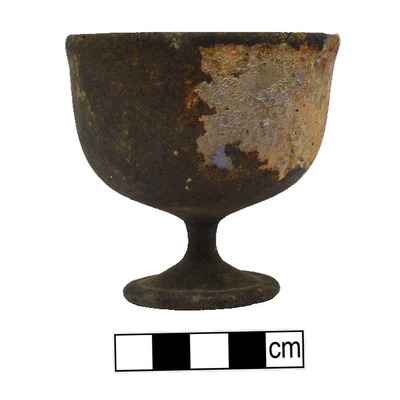
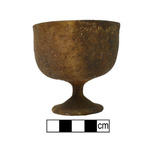
Goblet has a simple rim, cylindrical body rounded on the bottom, a short narrow stem and a conical base. The base is finished in a tubular ring. The pontil mark is visible in the apex of the concave base. At the bottom of the inside of the cup, a dome rises, surrounded by a trough, where the stem attaches.
-
Goblet
Unknown
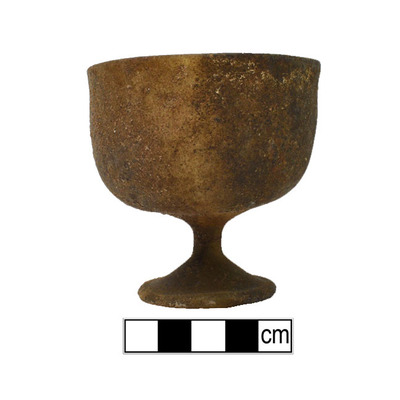
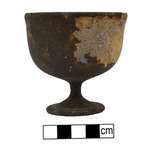
Delicate goblet has a rounded rim, cylindrical body rounded on the bottom, a short narrow stem and a conical base. The base is finished with a tubular ring. The pontil mark is visible in the apex of the concave base. At the bottom of the inside of the cup, a dome rises, surrounded by a small trough, where the stem attaches.
-
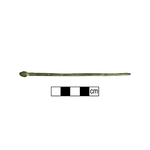
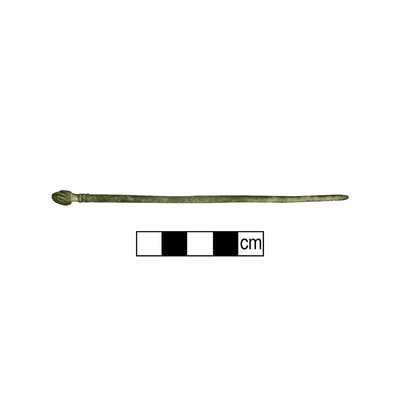
Hair ornament
Unknown
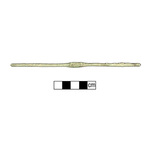
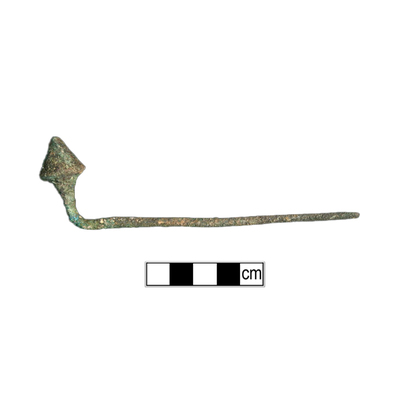
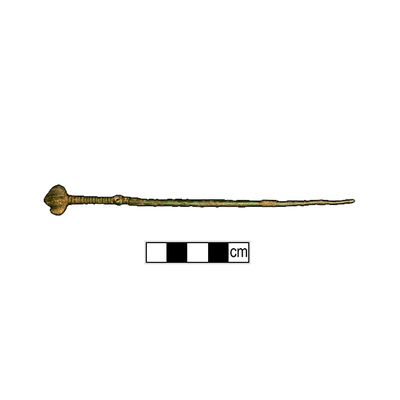
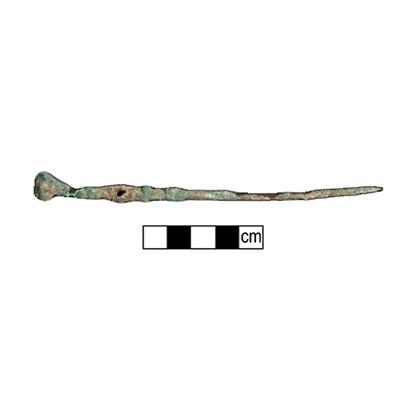
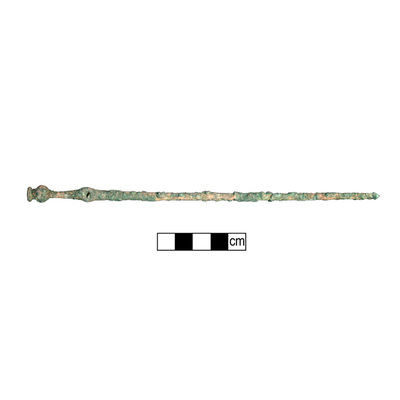
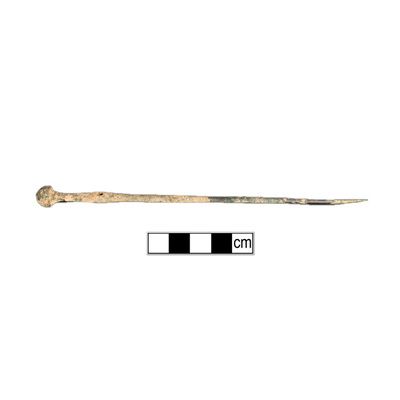
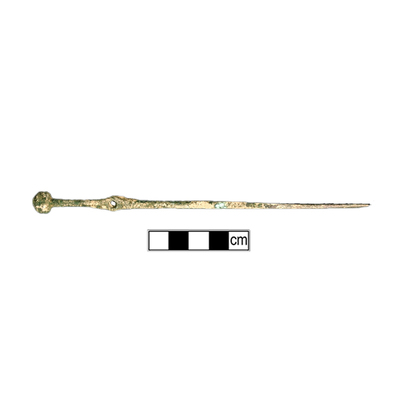
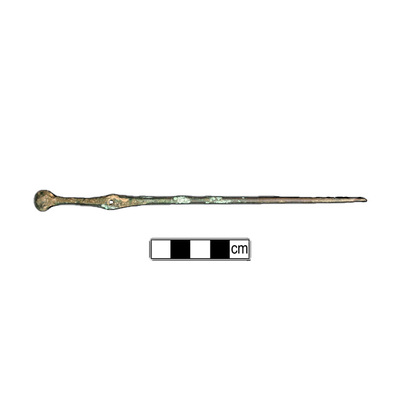
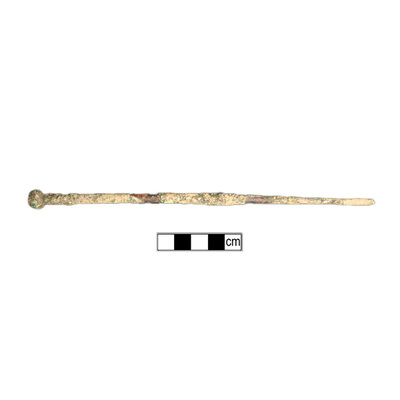
A solid shaft terminates at one end in a blunt point and at the other end in an embellishment. Three bands embellish the shaft, which then narrows before supporting the embellishment. The embellishment resembles a pointed bud, with a whorl design inscribed so that the lines terminate roughly 90 degrees from their origin at the base of the embellishment. The embellishment itself is just under 1 cm.
-
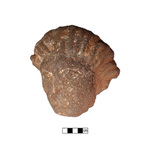
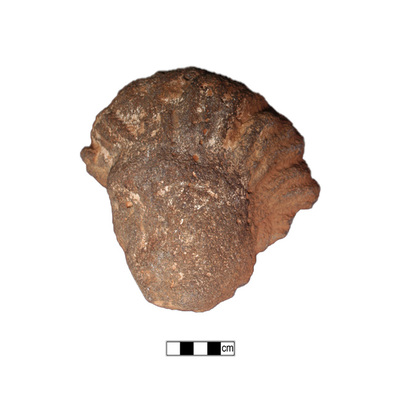
Head of a man
Unknown
Face of a man inclines to the left. Hair radiates away from the face in furrows. Top and bottom eye lids are distinguishable, as are eyebrows. Face area includes from the ears forward; there is no back to the head. The back is flat. The nose has been broken. The head is mounted on an acrylic stand.
-
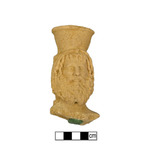
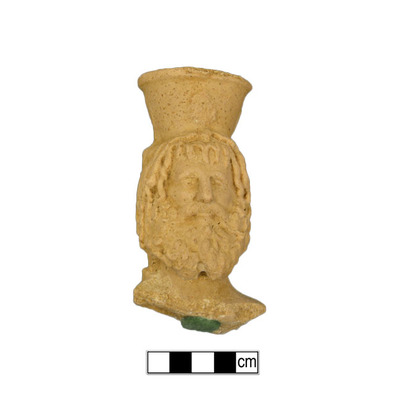
Head of a man
Unknown
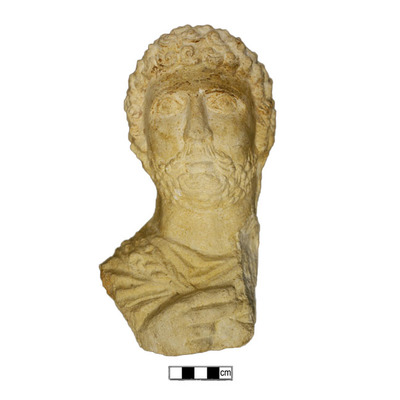
Head of a man, possibly representing the Graeco-Egyptian god Serapis, wearing a basket-shaped headdress with emblems on four sides. His hair falls in long curls on the forehead and all around the head to the shoulders. Face has bushy eyebrows, full mustache and full beard. Beard is curly.
-
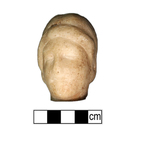
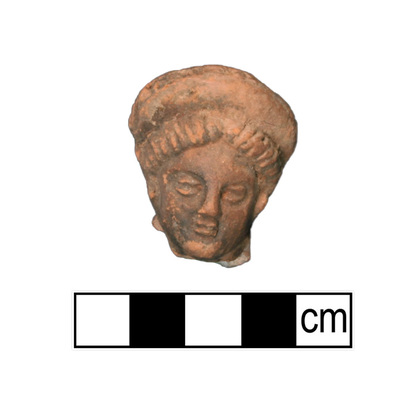
Head of a woman
Unknown
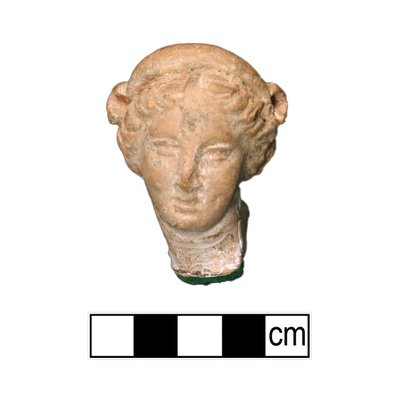
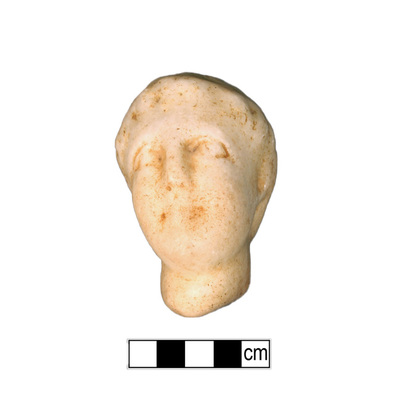
The head depicts a woman with hair rolled back from the face and at the nape of the neck. Above the nape, the hair is gathered in a bun. The hair on the crown is parted in the middle. The eyelids are worked in relief. The nose and other features are eroded. The face is asymmetrical: the cheek and jaw bones are more prominent on the right side than on the left.
-
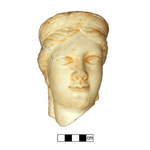
Head of a woman
Unknown
Female head wears an unadorned crown that stands above her hair to the front of her head and decreases in height to the back of her head. The hair is parted at the middle of the forehead. The hair sweeps away from hairline along the face to the back of the head into a chignon. Four long curls fall down the neck below the chignon. Hair is unfinished in the back. Earlobes show below the hairline. Eyelids are outlined. Lips are full. The nose and nostrils are clearly defined, as are the eyebrows.
-
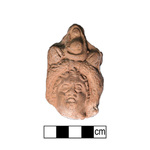
Head of a woman
Unknown
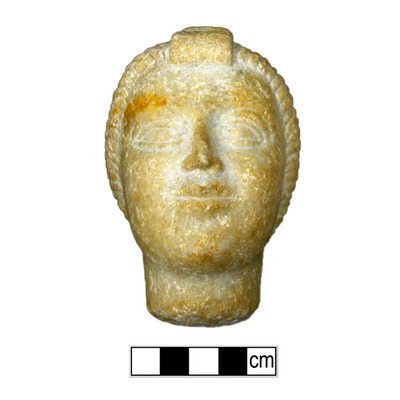
Female head has hair arranged in curls along her face. She wears a large headdress which a large diadem (?) in the middle and two knobs on either side. The knobs are decorated with vertical inscribed lines. The back of the head is shaped but not detailed. The eyes are oversized and are heavily outlined. The nose is flat and the lips are full. The head is hollow and broken off at the neck.
-
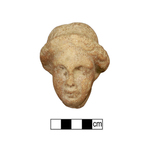
Head of a woman
Unknown
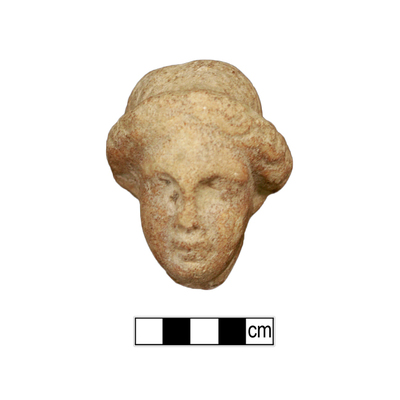
The face and hair suggest a young woman. The sides of her face are asymmetrical: the right side has a shallower cheekbone and jaw. The hair is rolled back from the forehead and sides of the face in one continuous coil. The hair on the crown and back is dressed in rows radiating away from the center part. Earlobes are visible beneath the roll of hair. The lips are parted and full. The nose is straight with defined nostrils. The chin is rounded. The back of the head is not finished. The head appears to have been broken off from a wall, with the face looking downward at a 45 degree angle.
-
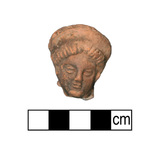
Head of a woman
Unknown
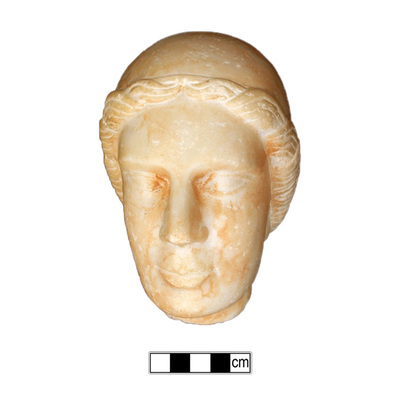
Head is adorned with a headdress set in the hair. Hair is parted in the middle of the forehead and arranged in rows radiating away from the face. The headdress is a broad circular device extending from above one ear, across the top of the head and over to above the other ear. Behind the headdress, the rows of hair are pulled into a knot at the nape. Details behind the headdress are roughly worked. The facial details are not sharp but include top and bottom eyelids, distinct straight lips and a double chin. Right ear is eroded.
-
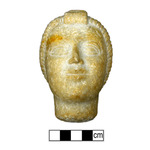
Head of a woman
Unknown
Sculpture of a young woman. The hair is arranged in tight rows (braids?) from the crown of her head to the nape of the neck. The hair is rolled back away from the face along the face and neck. The hair is secured at the forehead and nape with a broad comb patterned with circles. The eyelids are worked in relief; the eyebrows are distinct. The nose is narrow with defined nostrils. The lips are full. Earlobes show below the hair. The face is oval with slightly defined chin and cheekbones.
-
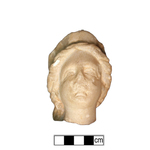
Head of a woman
Unknown
Woman is wearing a high, steep-sided headdress. Hair is parted off-center to the right and rolled in sweeps away from the face, trailing to the back. At the back, hair falls from beneath the sweeps and covers the nape of the neck. Upper and lower eyelids are thick and worked in relief. Nose and upper lip have been broken and eroded. Earlobes show from below the hair. Chin and eyebrow ridges are clearly defined.
-
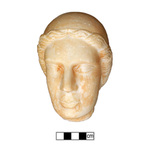
Head of a woman wearing a cap
Unknown
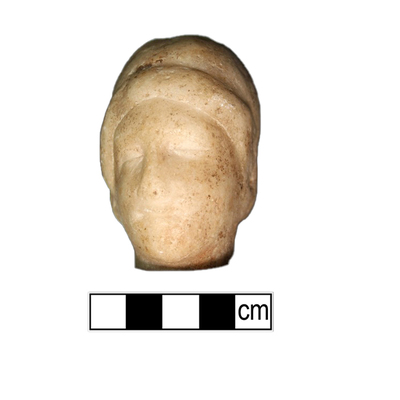
The figure wears a close-fitting cap. The hair is represented in a most unusual manner. Hair is parted in the middle and curls up from under the cap in crude, regular sweeps in a rigid sections. The graduated sweeps of hair meet symmetrically at the nape and roll up onto the cap. The nape and earlobes are exposed. The earlobes are very flat and close to the cheek. The face is smooth with a prominent, sharp nose. The nostrils and eyelids are defined, as is the brow bone. The eyes are deep set. The lips are clearly defined and prominent. The chin is clearly defined.
-
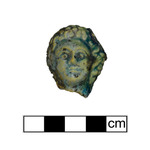
Head of a young man
Unknown
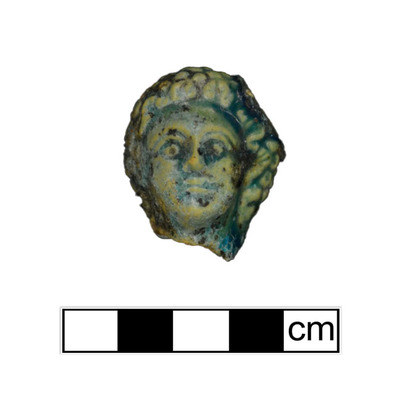
Clay head, hollow, depicts a youth with curly hair. The pupil of the eyes is concave; the eyes are set in the head so that the glaze fills in around the eyelids. The nose and eyebrow ridge are clearly defined. The lips are full and straight. The turquoise glaze creates a brown blemish on the left cheekbone and a pool of brown in the hair on the left side.
-
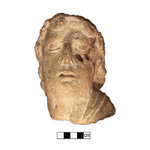
Head of a young man
Unknown
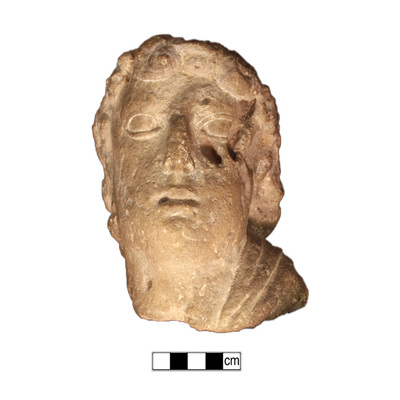
Head with neck and shoulder depicts a young man gazing forward, his head inclined toward his left shoulder. Hair is arranged in ringlets around his face, held by a filet. The hair behind the filet radiates in rows toward the crown. At the nape, the hair is rolled up in large curls over the filet. Part of the crown of the head is broken away. The face is smooth. The eyes seem vacant; they are defined by the eyelids and set high in the face. The nose and lips are small but well-defined. A garment is draped over the left shoulder.
-
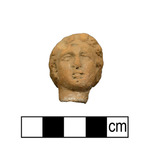
Head of a young woman
Unknown
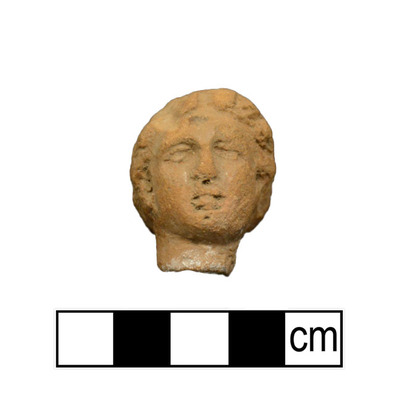
The head depicts a young woman. The head inclines to the right from the neck. The hair is rolled away from the forehead and secured across the forefront of the head by a filet which creates a furrow in the coiffure. The figure is solid.
-
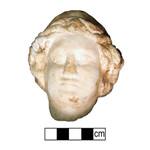
Head of a young woman
Unknown
Face of a young woman is smooth while the hair is roughly worked. A filet holds the waved and curled hair back from the forehead. Behind the filet, the hair design is indistinguishable from the shape of the head. The crown of the head has been worn down and the nose has been broken. The eyelids define the eyes. The lips are straight. The face is not symmetrical: the left side of the face is more prominent than the right side, and the left eye is higher on the face than the right.
-
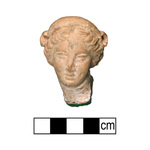
Head of a young woman
Unknown
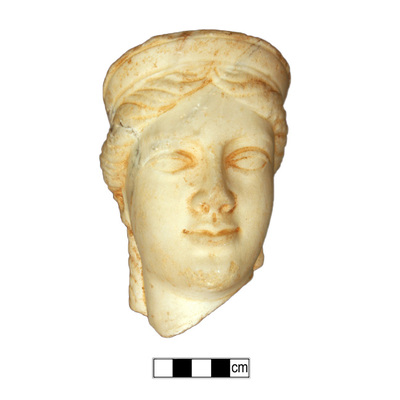
Female head shows the face of a young woman, inclined to the left and supported by a long slender neck. Hair is rolled back from her face and adorned with a stephane. The hair is parted in the middle and terminates at the sides of the stephane in large curls. The hair is gathered into a knot at the nape of the neck.
-
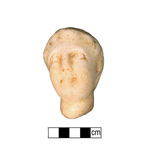
Head of a youth
Unknown
The features are so worn that gender is difficult to determine. The hair appears to be short and curly, suggesting a young man. The face inclines slightly to the left. The upper eyelids and eyebrow ridges are worked in relief. The nose has been broken and eroded. Earlobes are visible below the hair.
-
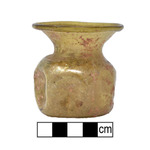
Jar
Unknown
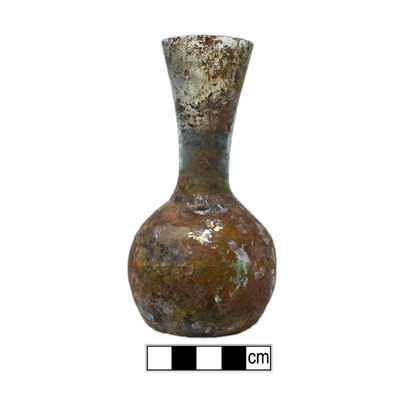
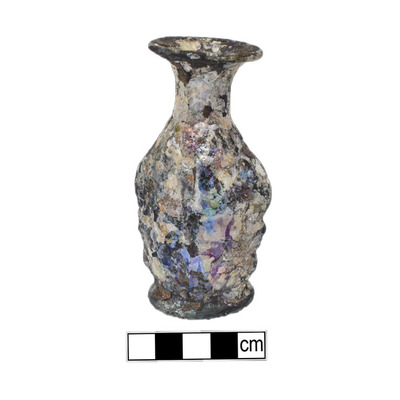
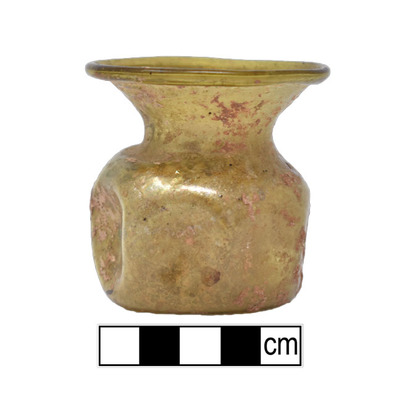
Jar has a flared mouth and tubular rim, folded evenly inward. Below the broad neck, the globular body is decorated with seven pressed indentions, some more pronounced than others. Black grit and long bubbles are evident in the neck and rim. The base is concave with no palpable pontil mark.
-
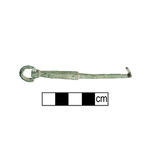
Key
Unknown
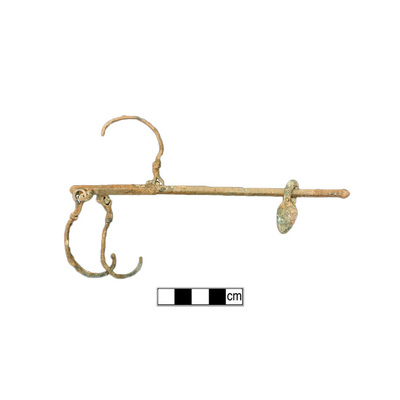
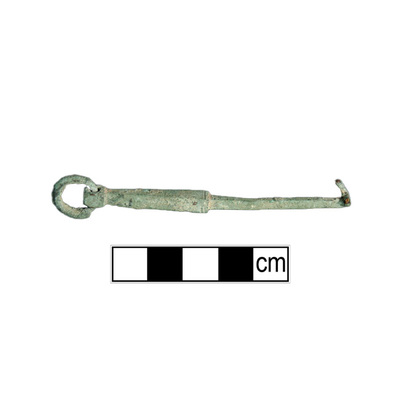
Rectangular body in three longitudinal sections terminates in two prongs. The tips of the prongs are broken away. The prongs reflex to the shaft at a 60 degree angle and are set at 90 degrees to each other. The top section of the key is square, pierced to hold the key ring. The ring articulates. The second section is square in cross-section and 3.0 cm in length, joining the first section with a narrower cross-section than the base of the first section. The second section has an inscribed line before the third section joins it. The third section has a smaller square cross-section than the base of the second section. The third section maintains its cross-section dimensions to the prongs.
-
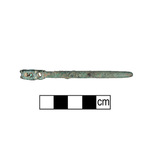
Kohl stick
Unknown
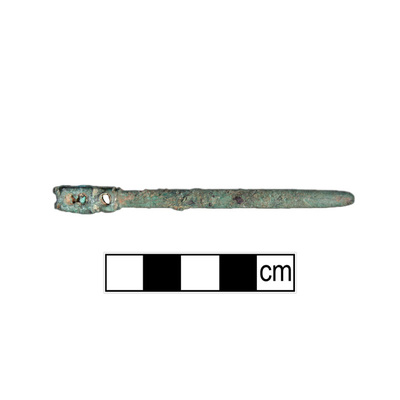
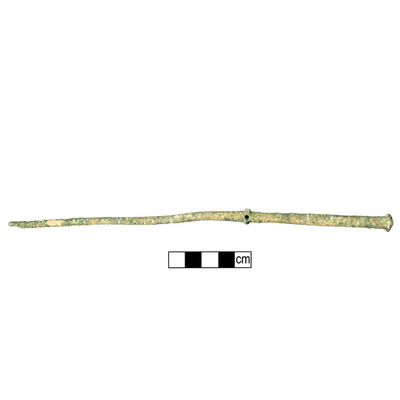
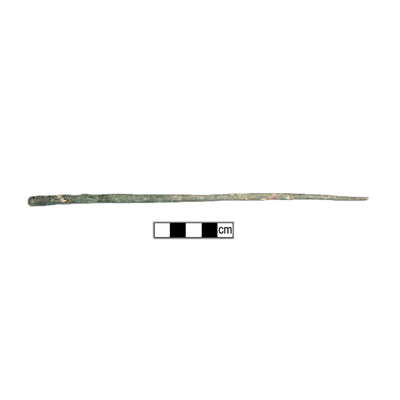
Blunt item has an openwork unit at the head end, designed as a series of chambers opening on all four sides and stacked one over the other. Two compartments survive with evidence that more were broken off the top. The shaft is round in cross-section, terminating at a smoothly rounded point.
-
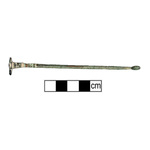
Kohl stick
Unknown
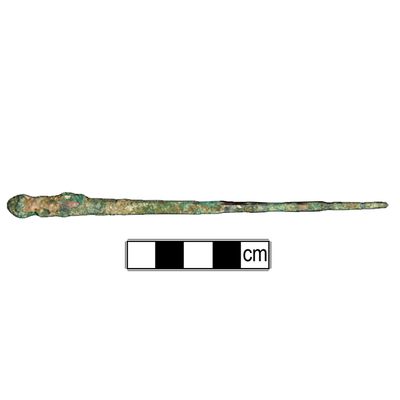
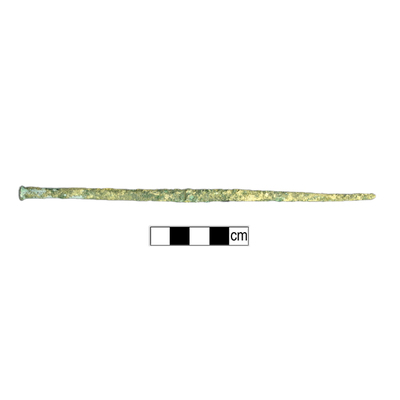
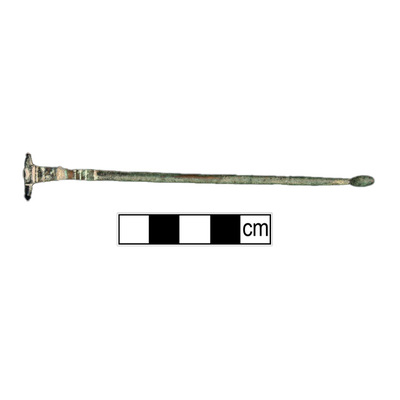
Slender solid rod has an ornament at the top and an olivary point at the other. The head end has two short arms at right angles to the shaft. A part of the top ornament seems to have been broken off above and between the arms. The shaft between and below the arms is embellished with six inscribed bands within the first 2.5 cm. of the shaft.
-
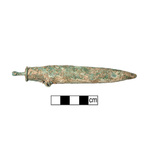
Kohl stick and bottle
Unknown
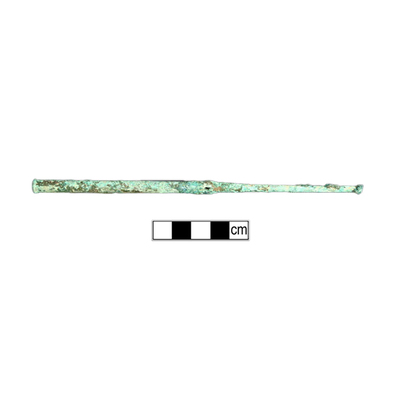
Amphora-shaped vessel opens with a flared lip to admit a kohl stick. Two cm. below the lip is a slight shoulder ridge. Below the ridge, the vessel tapers to a rounded point. Just below the shoulder, a loop was attached on either side. One loop has broken away. The kohl stick is 7.9 cm. long with a small knob at the upper end and a rounded point at the other. An embellishment may have been broken away from the upper end. The stick fits closely in the neck of the vessel and extends 0.4 cm above the lip of the vessel.
-
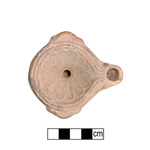
Lamp
Unknown
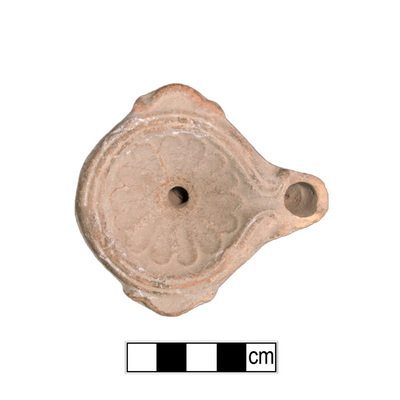
The item was acquired by Dr. Farid Karam in Lebanon. Circular molded lamp with two handles. The nozzle protrudes from the perimeter of the circle. The upper face is concave and decorated with 14 petals radiating from the well in the center. A shallow ridge is defined by two troughs around the apex of the loops. The ridge terminates on either side of the nozzle by scrolling outward. The base is flat and defined by a groove.
-
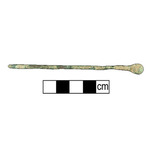
Ligula
Unknown
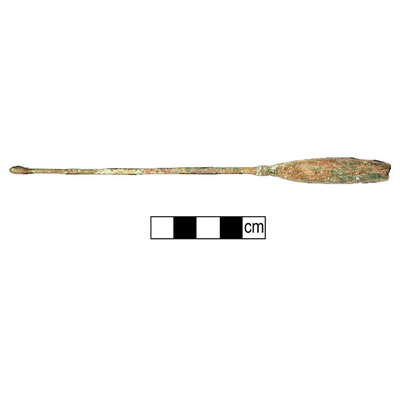
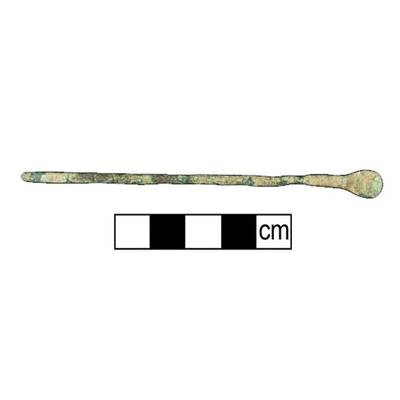
Slender tool with a cylindrical, solid shaft. One end terminates in a rounded point; the other end terminates in a small, shallow, round spoon.
-
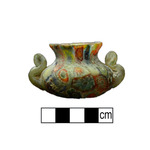
Millefiori jar
Unknown
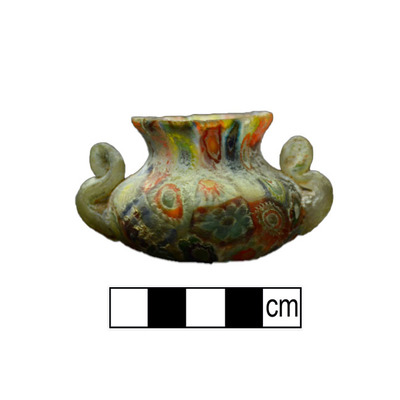
Squat glass pot has a wide neck, flared mouth and simple rim. The base is shallowly concave with a palpable pontil mark. The two handles are S shaped and attached to both the body of the vessel and to the shoulder. The exterior surface is rough following the contours of the designs in the canes; the interior surface is smoother and cloudy. The vessel is lined with translucent glass. The orange color in the canes are vibrant and unusual for the ancient world. Research into the introduction of various colors and patterns in millefiori glass will help date this object.
-
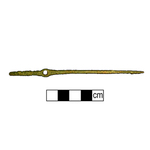
Needle
Unknown
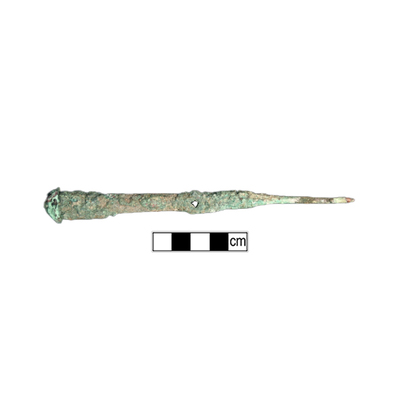
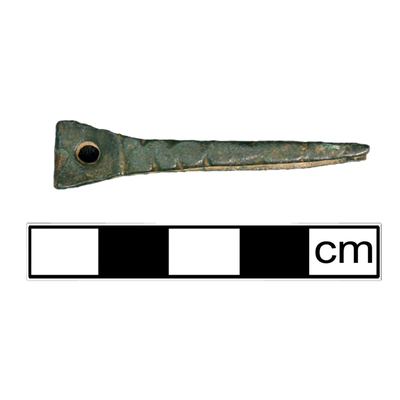
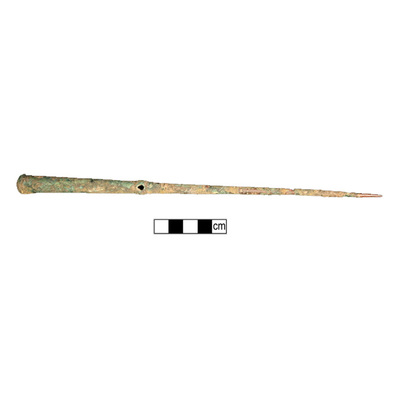
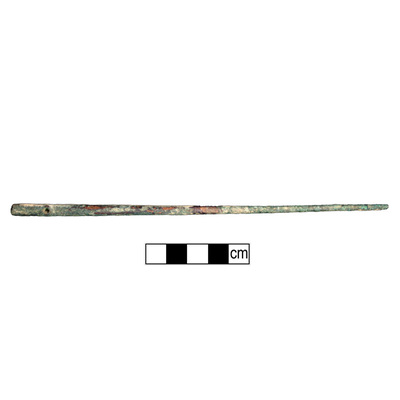
The dark brown metal object tapers from a rectangular cross-section at the blunt head end to a rounded point. The forged eye of the needle is 3 cm. below the blunt end. The eye is clear of debris. The shaft bulges on either side of the large eye.
-
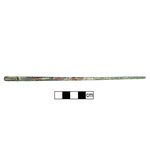
Needle
Unknown
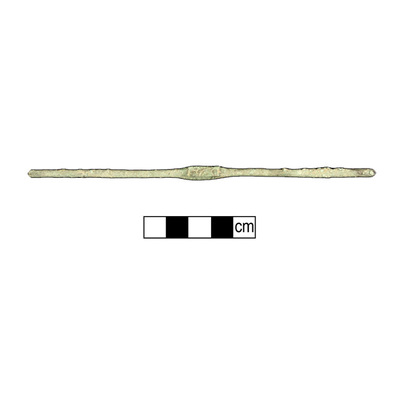
Solid shaft tapers from one blunt end to the other blunt end. A bore pierces the thicker end beginning 2.0 cm. below the end. The bore is clear and slightly distorts the walls of the object on either side of the hole.
-
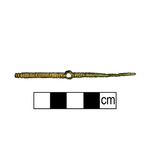
Needle
Unknown
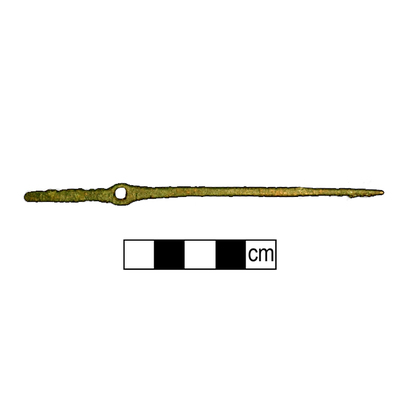
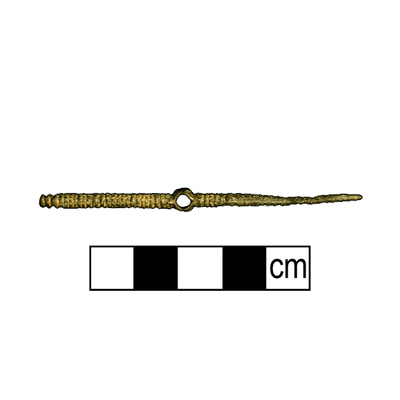
The greenish-brown metal object has a sharp end, an eye forged at the midsection and a rounded end. The object maintains a round cross-section throughout. The shaft bulges on either side of the eye, which is clear of debris. The object has 30 bands inscribed from the blunt end to 0.5 cm. below the eye.
-
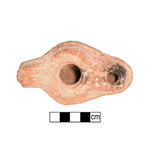
Oil lamp
Unknown
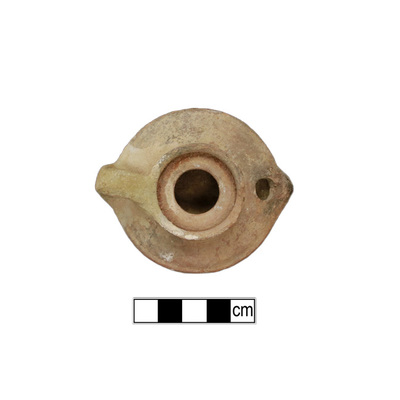
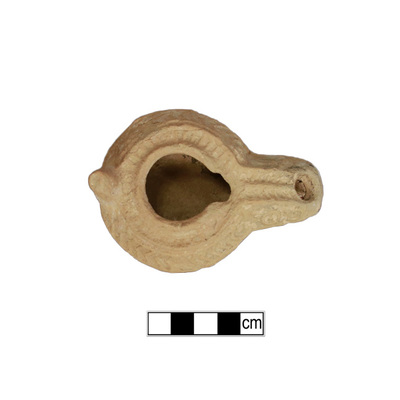
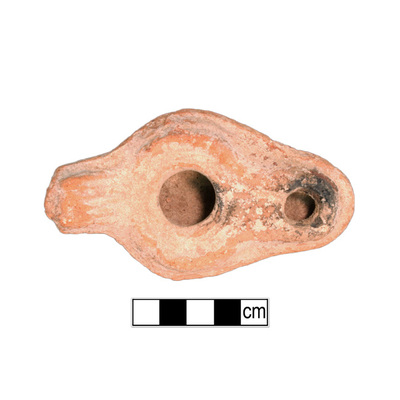
Molded lamp has a tongue handle that rises at a 45 degree angle from the back of the lamp. The handle is 2.5 cm. wide and 1.6 cm. thick, decorated with five vertical inscribed lines on the inside face of the handle. There is no other surface decoration. A band runs along the outer edge of the handle and traces the perimeter of the lamp. A ridge defines the upper edge of the lamp, surrounding both the fill hole and the nozzle. The base is a circular ridge, heavily worn on this object. Black discoloration at the nozzle indicates use.
-
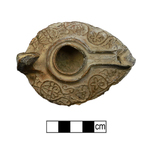
Oil lamp
Unknown
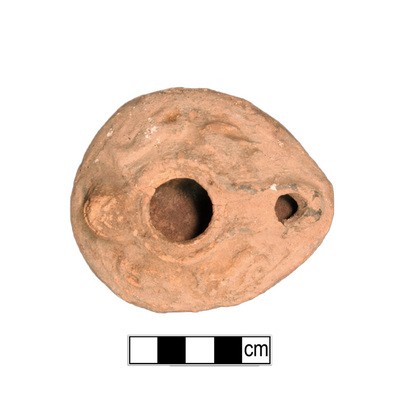
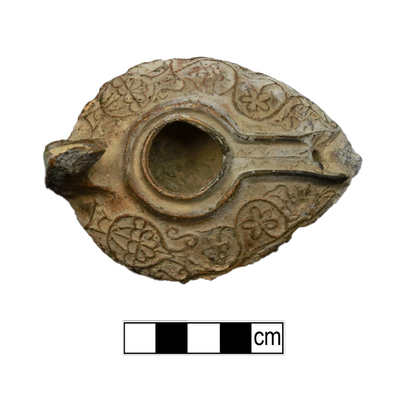
Lamp is decorated with raised tracings of leaves, grapes, flowers and birds. Base is a ridge in a teardrop shape, which replicates the shape of the perimeter of the lamp itself. Handle rises from the back of the lamp in a C-shape, curving toward the fill hole. A trough defined by the rim of the fill hole and a ridge drains to the nozzle.
-
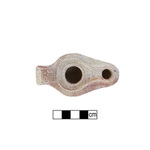
Oil lamp
Unknown
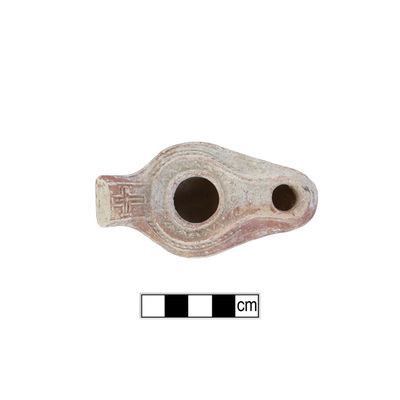
Molded lamp has a handle rising from the back of the body at a 75 degree angle. The nozzle extends to the side opposite the handle. The handle is 3 cm. wide and 1.5 cm. deep, decorated on the inside face with a cross. The fill hole and nozzle are outlined by a ridge. A zigzag pattern surrounds the fill hole; a row of dots surrounds the fill hole below the ridge. The base was formed by trimming the body away to create a ridge. The lamp bears traces of a red wash which is largely worn off.
-
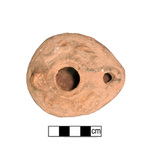
Oil lamp
Unknown
Lamp is decorated with four animals whose features cannot be distinguished. The foot is a circular ridge with eight arms radiating from the center. The handle rises from the surface of the top of the lamp in a conical form. A trough surrounds the fill hole and leads to the nozzle, which is encompassed in the body of the teardrop-shaped lamp. Discoloration at the nozzle indicates use.
-
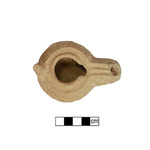
Oil lamp
Unknown
Molded lamp has a circular body from which the nozzle extends on the side away from the handle. The high handle is a conical projection rising from the upper surface of the lamp at a right angle to the base. The upper surface is decorated with raised chevrons and circles. The bottom rests on a raised circle with a potter's mark inside: M over Alpha? A piece of the fill hole rim and upper body toward the nozzle are broken away. The nozzle is blocked by debris. Discoloration on the nozzle indicates use.
-
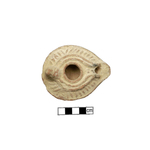
Oil lamp
Unknown
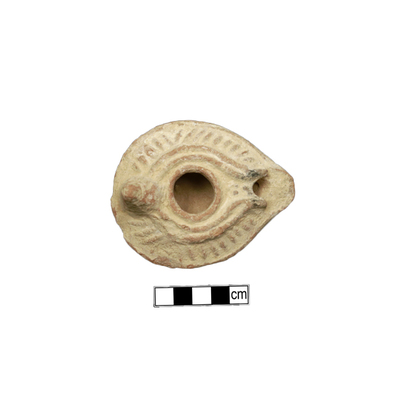
Teardrop-shaped lamp has a high conical handle rising from the upper surface of the lamp on the side opposite from the nozzle. The nozzle is formed at the point. The fill hole is surrounded by a double ridge that leads to the nozzle. The upper surface of the nozzle is broken away. Raised bars decorate the upper surface between the perimeter of the lamp and the outmost ridge around the fill hole. The design is sometimes referred to as bilanciolate. The base is an oval ridge. Black discoloration at the nozzle indicates use.
-
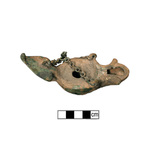
Oil lamp
Unknown
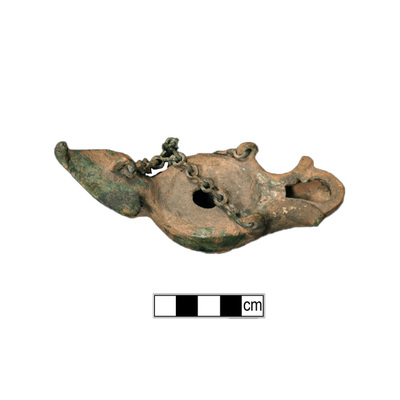
Keyhole-shaped lamp is embellished on either side of the spout with scrolling that arches away to create a fleur-de-lis shape for the spout. Leaf-shaped handle supports one of the three hanging chains. The other two attach to the forward part of the lamp along the upper edges between the fill hole and the spout. The three chains meet above the fill hole; a single length of chain extends to hang the entire object. The chain is made of links in which two circles are turned at 90 degrees from each other. The base is formed by a circle of metal located under the well. The object is free-standing.
-
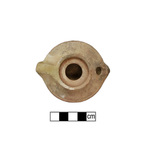
Oil lamp
Unknown
The body of the lamp is shaped like a lentil, with a slight point in front of the nozzle and a circular handle that rises from the opposite side. The handle attaches to the ridge that forms a collar above the fill hole. The handle was attached after the body was thrown. There is no surface decoration. The base is a shallow platform that extends below the body of the lamp, having been carved out of the vessel. Black discoloration on the nozzle indicates that this lamp was used. The nozzle and the handle are not aligned.
-
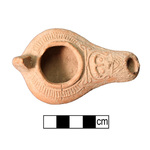
Oil lamp
Unknown
Lamp is decorated with a band of ridges radiating away from the fill hole. A bearded face embellishes the upper surface of the nozzle. Base is a central dot surrounded by three graduated rings. The knife-trimmed handle rises in a semicircular shape from the body of the lamp and opposite the nozzle. Dark residue at the nozzle indicates use.
-
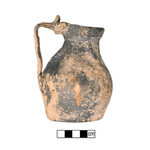
Oinochoe
Unknown
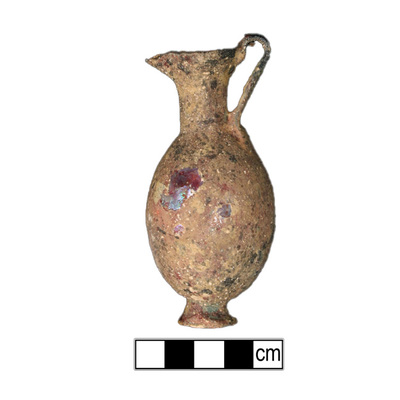
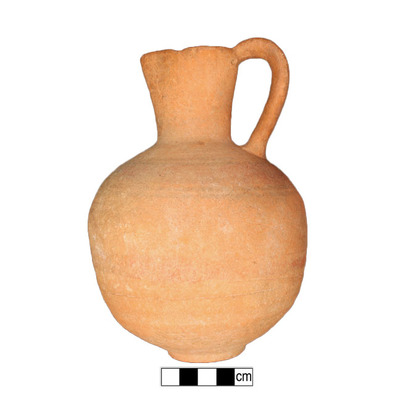
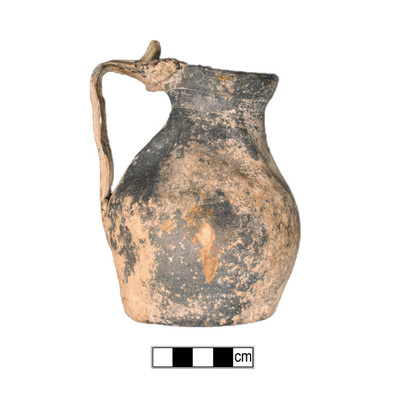
Heavy pitcher has two inscribed bands at the shoulder and three at the neck. Handle has a ridge along the outside. The handle terminates at the top in a thumb-piece and a crescent-shaped attachment that fits the uneven rim of the pitcher. The bottom of the handle terminates on a number of solder patches. The mouth is round. The base is out-of-round and slightly indented. The body has several dents.
-
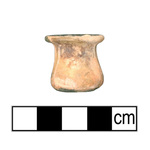
Ointment jar
Unknown
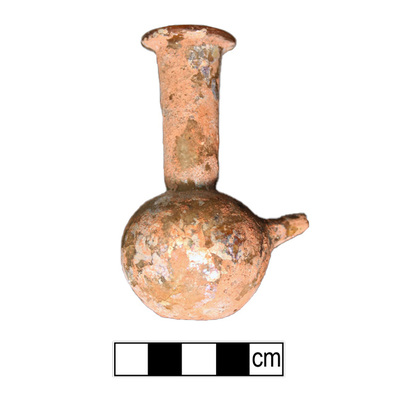
Miniature jar has a flared mouth and evenly in-folded rim. Below the rim, the sides slope gently outward to meet the base, which is concave.
-
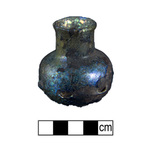
Ointment jar
Unknown
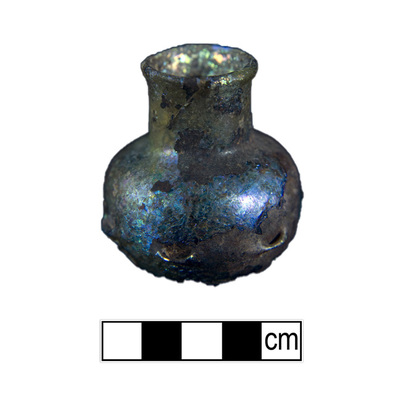
Squat globular body supports a wide neck that is topped by an in-folded, tabular rim. Six pinch marks decorate the perimeter of the jar. The bottom is sharply concave with a high conical protrusion toward the interior and a pontil mark.
-
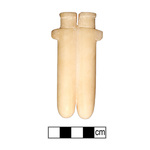
Perfume bottle
Unknown
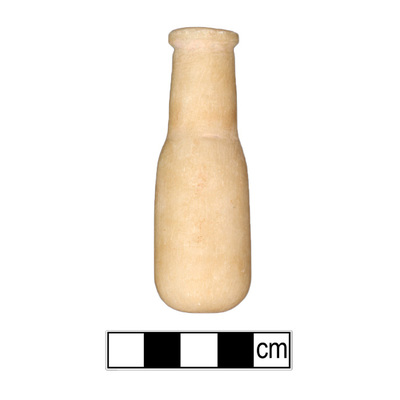
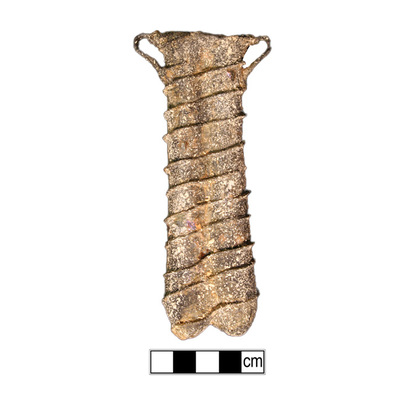
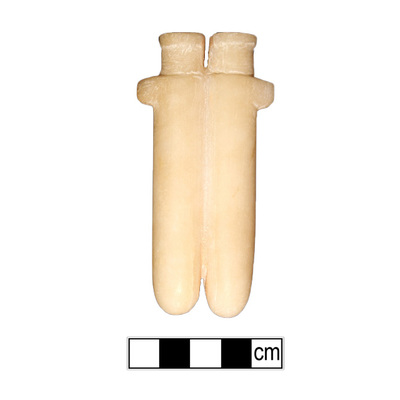
The two-vial unit, joined along one wall, is carved from one piece of alabaster. The holes are drilled for the cavity of the vials and through the handles on either side. The drilled holes are off-center in one vial and in both handles. The walls of the vessel are translucent.
-
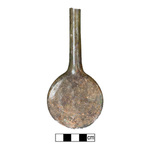
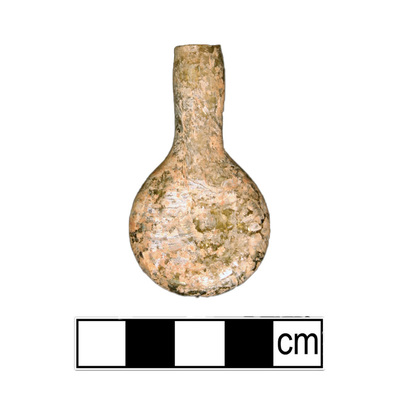
Pilgrim bottle
Unknown
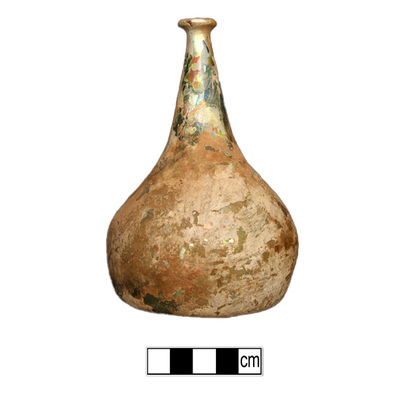
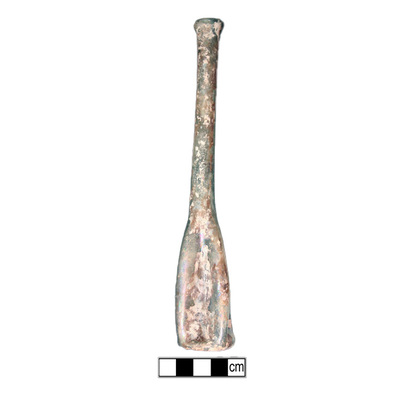
The body of the bottle is flat front-to-back. Rim is round but sharp and jagged, as if recently broken. Neck is cylindrical for 8 cm., after which it flattens as it expands into the round and flattened body. There is no palpable pontil mark. The bottle cannot stand. The neck has many long bubbles and some diagonal cracks.
-
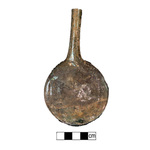
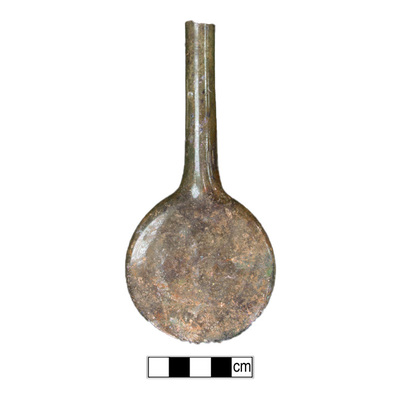
Pilgrim bottle
Unknown
The body is flat front-to-back. Rim is rounded but broken, as if recently broken. Neck is cylindrical for 6.5 cm., after which it flattens to join the body section. There is no palpable pontil mark. The bottle cannot stand freely. The neck has some long bubbles and diagonal cracks.
-
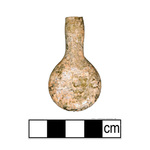
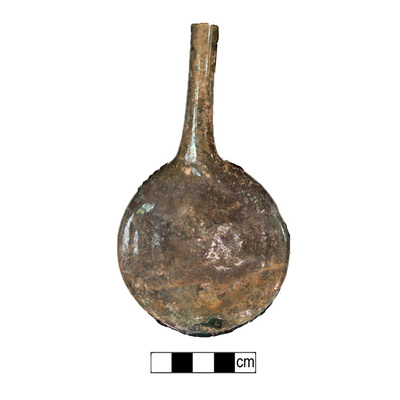
Pilgrim bottle
Unknown
The bottle was flattened on both sides after blowing. The sides are slightly concave and the rim has been cracked off. The cylindrical neck narrows slightly just before meeting the round body. The bottle has no base or pontil mark; it cannot stand.
-
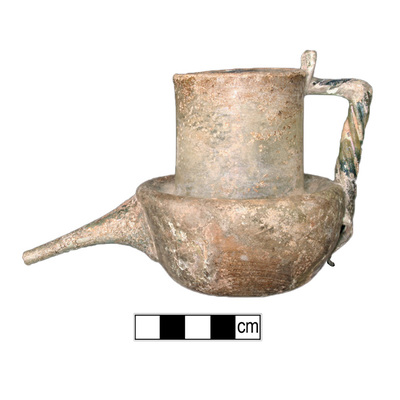
Pitcher
Unknown
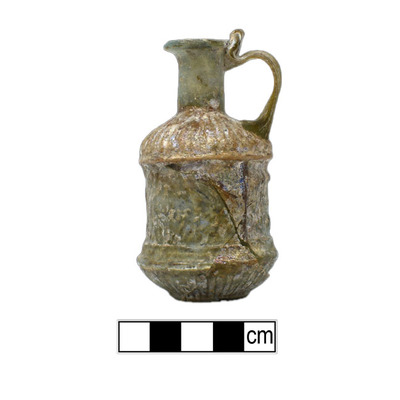
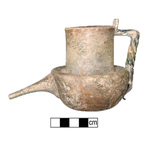
The vessel has a broad, cylindrical neck with a simple rim. The neck descends into the body, forming a trough around the neck. The spout is attached to the body and points downward at a 20 degree angle. A groove extends along the topside of the spout. The tip of the spout appears to be broken off. The handle is formed by a bundle of five glass rods which are twisted. One of the rods is blue glass. Thumb-piece attaches along the rim; handle forms a right angle and descends to reattach along the shoulder and body, terminating in a scroll of glass. The base is concave with a sharp pontil mark.