Art and Art History Collection (Saskia)
The Art and Art History Collection from Saskia Ltd., Cultural Documentation features a wide range of digital images with an emphasis on the history of Western art. There are 3,645 images in this collection. Image sets include: The Dresden Collection, Brueghel and Rubens, Ancient Greek Art (Architecture and Sculpture), Ancient Art (Minoan and Roman), Roman Art, Michelangelo, Italian Renaissance, Realism, Impressionism, Post-Impressionism, and Contemporary Architecture. Images from art history textbooks include: Gardner, Expanded Gardner, Stokstad, Gilbert, Hartt, Cunningham, and Reich.
Access note: Only thumbnail images and descriptive information are available to non-USF users. Full access to this collection is available only to authorized users on the USF network on campus or via VPN. For more information or to report technical issues please contact us.
-
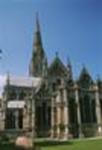
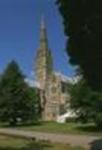
Salisbury Cathedral
Unknown
Tower, S Transpet, E end and Trinity Chapel (formerly Lady Chapel), from E
-
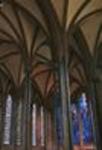
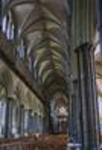
Salisbury Cathedral
Unknown
Closer view of Trinity Chapel: columns, vaulting & stained glass, from southwest
-
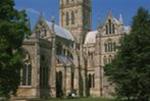
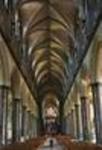
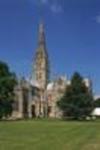
Salisbury Cathedral
Unknown
Closer view: Tower, Chapter House, S Transept, flying buttresses, and quire, from south-southeast
-
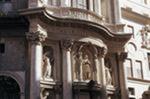
San Carlo alle Quattro Fontane
Unknown
Upper half of lower register: undulating entablature and statue of St. Charles Borromeo
-
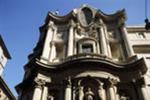
San Carlo alle Quattro Fontane
Unknown
Upper Façade, 1675-77, by the architect's nephew, Bernardo Borromini
-
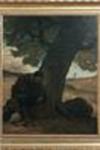
Sancho Panza
Unknown
Daumier's paintings were probably done for the most part fairly late in his career. Although he was accepted four times by the Salon, he never exhibited his paintings otherwise and they remained practically unknown up to the time of an exhibition held at Durand-Ruel's gallery in 1878, the year of his death. The paintings are in the main a documentation of contemporary life and manners with satirical overtones, although he also did a number featuring Don Quixote as a larger-than-life hero. His technique was remarkably broad and free.
-
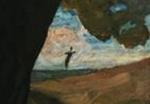
Sancho Panza
Unknown
Daumier's paintings were probably done for the most part fairly late in his career. Although he was accepted four times by the Salon, he never exhibited his paintings otherwise and they remained practically unknown up to the time of an exhibition held at Durand-Ruel's gallery in 1878, the year of his death. The paintings are in the main a documentation of contemporary life and manners with satirical overtones, although he also did a number featuring Don Quixote as a larger-than-life hero. His technique was remarkably broad and free.
-
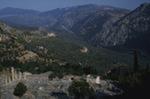
Sanctuary of Apollo, Aerial View, A
Unknown
Panorama with Temple of Apollo at left, Treasury of Athenians, looking southeast
-
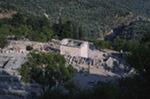
Sanctuary of Apollo. Aerial View, B
Unknown
View down from above Theater, with Temple of Apollo at left, Treasury at center, with winding Sacred Way
-
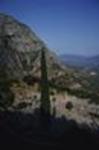
Sanctuary of Apollo, Aerial View, C
Unknown
Panorama over the Theater to the Temple, view toward the east
-
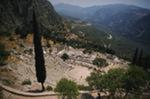
Sanctuary of Apollo, Aerial View, D
Unknown
Panorama over the Theater, Temple, Treasury, valley, view toward east
-
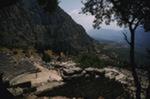
Sanctuary of Apollo, Aerial View, E
Unknown
Panorama over the Theater, Temple, Treasury with Mount Parnassos, valley
-
Sanctuary of Apollo, Ancient Stadium, B
Unknown
Detail view from east, form constructed of stones in foreground
-
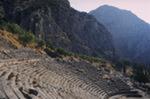
Sanctuary of Apollo, Ancient Theatre of Delphi, B
Unknown
View toward east, Mount Parnassos beyond, wide-angle view of the steps and seats of the theater
-
Sanctuary of Apollo, Ionic Column Capital
Unknown
Ionic column and capital in front of Stoa and polygonal retaining wall
-
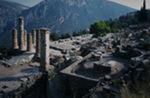
Sanctuary of Apollo, Pillar of Prusias II, A
Unknown
View from northeast toward Mount Kirphys, Pedestal of Prusias, Temple of Apollo
-
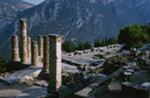
Sanctuary of Apollo, Pillar of Prusias II, B
Unknown
Closer view northeast toward Mount Kirphys, Pedestal of Prusias, Temple of Apollo
-
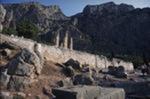
Sanctuary of Apollo. Polygonal Retaining Wall, A
Unknown
Overall view of wall with Stoa and Temple of Apollo above in the center
-
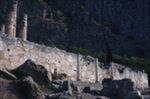
Sanctuary of Apollo, Polygonal Retaining Wall, B
Unknown
View North to polygonal wall, with columns of Temple of Apollo to the left
-
Sanctuary of Apollo, Polygonal Retaining Wall, C
Unknown
View North to polygonal wall, with columns of Temple of Apollo above in the center
-
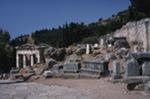
Sanctuary of Apollo, Rock of the Sibyl
Unknown
Sacred Way, with Treasury of Athenians at left, Rock of the Sibyl, Stoa
-
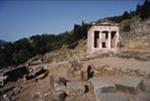
Sanctuary of Apollo, Sacred Way
Unknown
Sacred Way, with Treasury of Athenians at right, Rock of the Sibyl, Stoa
-
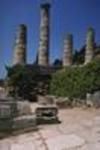
Sanctuary of Apollo, Temple of Apollo, A
Spintharos (Architect), Xenodorus (Architect), and Agathon (Architect)
Northeast end of Temple of Apollo, seen from the Sacred Way
-
Sanctuary of Apollo, Temple of Apollo, B
Spintharos (Architect), Xenodorus (Architect), and Agathon (Architect)
View from above of restored Doric columns at North end
-
Sanctuary of Apollo, The Gymnasium Complex, Aerial View
Unknown
View east with Sanctuary of Athena & Tholos at center
-
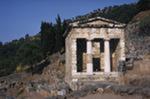
Sanctuary of Apollo, Treasury of the Athenians
Unknown
General frontal view of building from Northeast
-
Sanctuary of Apollo, Treasury of the Athenians, Exterior Detail
Unknown
Detail of entablature, frontal view of building
-
Sanctuary of Athena Pronaia, with Tholos (ca. 380 BC) at center
Unknown
Detail, base of Ionic Treasury, view from E
-
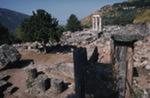
Sanctuary of Athena Pronaia, with Tholos (ca. 380 BC) at center
Unknown
Morning view from E, with Temple of Athena and the Tholos
-
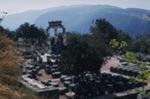
Sanctuary of Athena Pronaia, with Tholos (ca. 380 BC) at center
Unknown
Morning view from the northwest
-
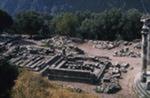
Sanctuary of Athena Pronaia, with Tholos (ca. 380 BC) at center
Unknown
View from N: a Doric Treasury at left, Ionic Treasury of Massiliote at center
-
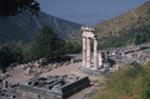
Sanctuary of Athena Pronaia, with Tholos (ca. 380 BC) at center
Unknown
View E of the Tholos, with Ionic Treasury of the Massiliote (ca.520 BC)
-
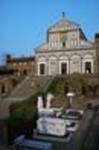
San Miniato al Monte
Unknown
General view of church in setting, w. staircase, gardens and sculpture below, afternoon light
-
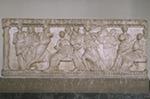
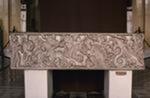
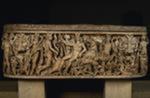
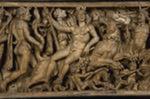
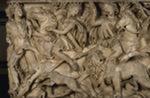
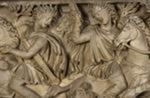
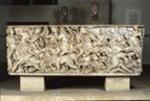
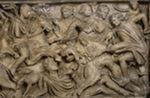
Sarcophagus from Atella, with Achilles among the Daughters of Lycomedes
Unknown
Total from front center
-
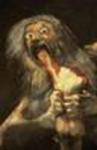
Saturn devouring one of his sons
Unknown
This disturbing painting is one of the fourteen known as the "black paintings" with which Goya decorated the dining an living rooms of his home, called the "Quinta del Sordo", which he bought in 1819 on the banks of Madrid's Manzanares river. Seventy years after they were painted, the house's owner decided to have them taken down and transferred to canvas given their deteriorated condition. Saturn Devouring one of his Sons" was one of the six works decorating the dining room. It depicts a mythological theme- about the god Saturn or Cronos- acting as an allegorical representation of time. The god devoured, as time does to all that it creates, the children born to his wife Cibele: he feared that one would dethrone him.
-
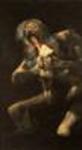
Saturn devouring one of his sons Quinta del Sordo
Unknown
This disturbing painting is one of the fourteen known as the "black paintings" with which Goya decorated the dining an living rooms of his home, called the "Quinta del Sordo", which he bought in 1819 on the banks of Madrid's Manzanares river. Seventy years after they were painted, the house's owner decided to have them taken down and transferred to canvas given their deteriorated condition. Saturn Devouring one of his Sons" was one of the six works decorating the dining room. It depicts a mythological theme- about the god Saturn or Cronos- acting as an allegorical representation of time. The god devoured, as time does to all that it creates, the children born to his wife Cibele: he feared that one would dethrone him.
-
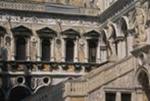
Scala dei Giganti, Doge's Palace
Unknown
General view of Cortiletto dei Senatori w. N wall (designed by Giorgio Spavento & Antonio Scarpoletto, mid 16th c)
-
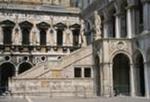
Scala dei Giganti, Doge's Palace
Unknown
General view of staircase and lower portions of N and E walls