Art and Art History Collection (Saskia)
The Art and Art History Collection from Saskia Ltd., Cultural Documentation features a wide range of digital images with an emphasis on the history of Western art. There are 3,645 images in this collection. Image sets include: The Dresden Collection, Brueghel and Rubens, Ancient Greek Art (Architecture and Sculpture), Ancient Art (Minoan and Roman), Roman Art, Michelangelo, Italian Renaissance, Realism, Impressionism, Post-Impressionism, and Contemporary Architecture. Images from art history textbooks include: Gardner, Expanded Gardner, Stokstad, Gilbert, Hartt, Cunningham, and Reich.
Access note: Only thumbnail images and descriptive information are available to non-USF users. Full access to this collection is available only to authorized users on the USF network on campus or via VPN. For more information or to report technical issues please contact us.
-
Oath of the Horatii
Unknown
The three brothers, the Horatii, chosen by Rome to defy the champions of the town of Alba called the Curiaces, are taking an oath that they will win or die and are receiving swords from their father. Like Corneille in his tragedy "Horace", David contrasts the stoic resolution of the warriors, underlined by strict geometry and strident color, with the gentle line of the women which expresses their suffering. Painted in 1784 and shown in Paris the following year, this painting earned David a European reputation as uncontested leader of the Neoclassical movement.
-
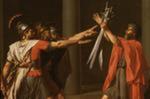
Oath of the Horatii (detail)
Unknown
The three brothers, the Horatii, chosen by Rome to defy the champions of the town of Alba called the Curiaces, are taking an oath that they will win or die and are receiving swords from their father. Like Corneille in his tragedy "Horace", David contrasts the stoic resolution of the warriors, underlined by strict geometry and strident color, with the gentle line of the women which expresses their suffering. Painted in 1784 and shown in Paris the following year, this painting earned David a European reputation as uncontested leader of the Neoclassical movement.
-
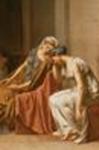
Oath of the Horatii (detail)
Unknown
The three brothers, the Horatii, chosen by Rome to defy the champions of the town of Alba called the Curiaces, are taking an oath that they will win or die and are receiving swords from their father. Like Corneille in his tragedy "Horace", David contrasts the stoic resolution of the warriors, underlined by strict geometry and strident color, with the gentle line of the women which expresses their suffering. Painted in 1784 and shown in Paris the following year, this painting earned David a European reputation as uncontested leader of the Neoclassical movement.
-
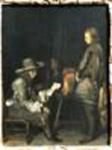
Officer Reading a Letter
Unknown
One of the greatest Dutch masters of the Golden Age, Gerard ter Borch, is the artist who first popularized the letter theme. His painting of '' Officer Reading a Letter" is considered the "perfect embodiment of this elegant new treatment of the letter theme."
-
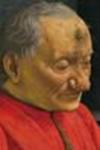
Old Man with a Young Boy (detail) Portrait of an Old man with a Young Boy
Unknown
Ghirlandaio is best known for his frescoes, in which he often set religious subjects in a secular setting and in which he included recognizable portraits. His largest commission, completed in 1490, depicting scenes from the lives of the Virgin and St John the Baptist, was in the Santa Maria Novella, Florence. Ironically, in An Old Man and his Grandson, one of his best works, the identity of the protagonists remains a mystery. This naturalistic double portrait is an intimate and moving portrayal of a tender relationship between doting age and attendant youth. The loving young boy is oblivious to the old man's unfortunate physiognomy, a symptom of rhinophyma, from which he suffered.
-
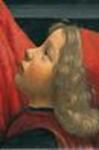
Old Man with a Young Boy (detail) Portrait of an Old man with a Young Boy
Unknown
Ghirlandaio is best known for his frescoes, in which he often set religious subjects in a secular setting and in which he included recognizable portraits. His largest commission, completed in 1490, depicting scenes from the lives of the Virgin and St John the Baptist, was in the Santa Maria Novella, Florence. Ironically, in An Old Man and his Grandson, one of his best works, the identity of the protagonists remains a mystery. This naturalistic double portrait is an intimate and moving portrayal of a tender relationship between doting age and attendant youth. The loving young boy is oblivious to the old man's unfortunate physiognomy, a symptom of rhinophyma, from which he suffered.
-
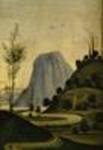
Old Man with a Young Boy (detail) Portrait of an Old man with a Young Boy
Unknown
Ghirlandaio is best known for his frescoes, in which he often set religious subjects in a secular setting and in which he included recognizable portraits. His largest commission, completed in 1490, depicting scenes from the lives of the Virgin and St John the Baptist, was in the Santa Maria Novella, Florence. Ironically, in An Old Man and his Grandson, one of his best works, the identity of the protagonists remains a mystery. This naturalistic double portrait is an intimate and moving portrayal of a tender relationship between doting age and attendant youth. The loving young boy is oblivious to the old man's unfortunate physiognomy, a symptom of rhinophyma, from which he suffered.
-
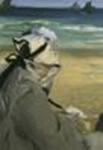
On the Beach: Mme E. Manet, Eugene Manet (wife and brother of the painter)
Unknown
Artist's wife, brushwork
-
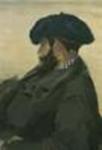
On the Beach: Mme E. Manet, Eugene Manet (wife and brother of the painter)
Unknown
Artist's brother, brushwork
-
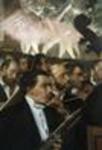
Orchestra of the Opera (detail) The Orchestra at the Opera House
Unknown
Both Edgar Degas and Henri Toulouse-Lautrec used the same bassoonist, D
-
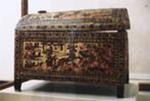
Painted Chest, from Tomb of Tutankhamen
Unknown
Total of long side. On panel: pharaoh in chariot, defeating the enemies of Egypt (Syrians and Nubians)
-
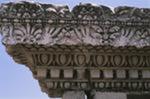
Palace of Domitian by Rubirius. 'Domus Augustana' (southern) portion
Unknown
Close-up of elaborate marble cornice
-
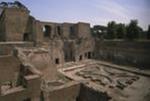
Palace of Domitian by Rubirius. 'Domus Augustana' (southern) portion
Unknown
Overall view from southwest
-
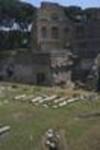
Palace of Domitian by Rubirius. Gardens of the so-called Stadium
Unknown
View of buildings on E side
-
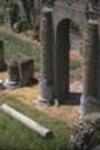
Palace of Domitian by Rubirius. Gardens of the so-called Stadium
Unknown
Detail of arch order on W side
-
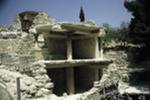
Palace of Minos at Knossos, South House
Unknown
South House, two-story reconstructed section at southwest corner
-
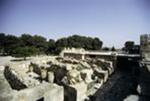
Palace of Minos at Knossos, West Wing, A
Unknown
Lower Story, West Wing, with magazines/ store rooms and Pithoi vessels, view facing northwest
-
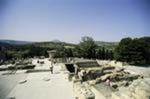
Palace of Minos at Knossos, West Wing, B
Unknown
Middle Story, West Wing, with view toward North Lustral Basin
-
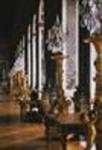
Palace of Versailles
Unknown
Hall of Mirrors, raking view of exterior wall w windows and candelabras
-
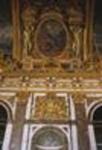
Palace of Versailles
Unknown
Hall of Mirrors. Elaborate ceiling and wall decorations by Charles LeBrun
-
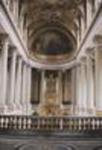
Palace of Versailles
Unknown
Royal Chapel, Interior, 1678-79, compl. After 1708 (ceiling decorations by A. COYPEL)
-
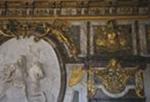
Palace of Versailles
Unknown
Salon of War, w decorative details by LeBrun and Coyseveaux's Louis XIV on Horseback
-
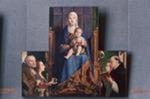
Pala di San Cassiano Madonna with the Saints Nicholas of Bari, Anastasia, Ursula and Dominic
Unknown
It was at the Neapolitan court of the Anjou Kings that Antonello came into contact with Franco-Flemish art and the new technique of oil painting. With this altarpiece for the Church of San Cassiano in Venice, Antonello introduced oil technique to northern Italy. What is today just a fragment was originally a high, rectangular panel with eight saints painted full length in a church interior on either side of the Madonna and grouped in a Santa Conversazione. The subtly applied colors better rendered the image of material substance. The Pala of San Cassiano was admired not only by Antonellos contemporaries; its lasting influence on Venetian painting extended from Bellini all the way to Titian.
-
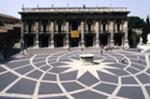
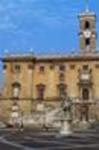
Palazzo dei Conservatori
Unknown
Overall view of façade and Piazza Campidoglio from salon of Museo Capitolino
-
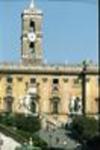
Palazzo dei Senatori, Piazza Campidoglio
Unknown
General view of façade, stairway and colossal statues
-
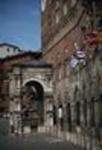
Palazzo Pubblico
Unknown
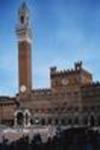
View of Cappella di Piazza, 1352-76. Commemorating delivery from the plague of 1348
-
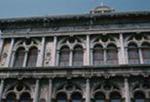
Palazzo Vendramin-Calergi
Unknown
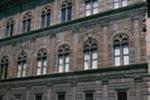
Detail view of upper façade showing cornice, window treatment and ornamentation
-
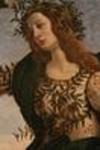
Pallas and the Centaur (detail)
Unknown
The strong and vigorous figure of Pallas can be traced back to classical sculpture and the Roman sarcophagus which inspired the face of the centaur has been identified.
-
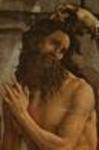
Pallas and the Centaur (detail)
Unknown
According to Humanist symbolism: wisdom (Pallas) overcomes instinct (the centaur), concluding the conceptual definition of Humanitas present in the other two allegories. A Roman sarcophagus inspired the face of the centaur.
-
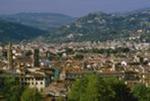
Panorama NE from Forte di Belvedere twoard Fiesole and surrounding hills. Towers of Badia and Bargello visible. (1987)
Unknown
View northeast towards Fiesole w. Towers of Badia and Bargello
-
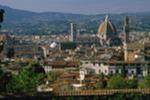
Panorama N from Forte di Belvedere toward Uffizi, Palazzo Vecchio and Duomo
Unknown
View north toward Uffizi, Palazzo Vecchio w. Medici tombs dome
-
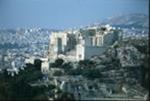
Panorama of Athens from Areopagus Rock at sunset
Unknown
View of W end of Acropolis w. Quadriga of Agrippa, Propylaea, Temple of Athena Nike
-
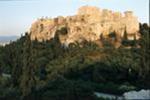
Panorama of Athens from Areopagus Rock at sunset
Unknown
Closer view of pedestal of the Quadriga of Agrippa, the Propylaea, Temple of Athena Nike
-
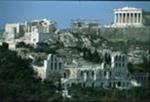
Panorama of Athens from Philapappus Hill
Unknown
View northeast of W end of Acropolis w. the Propylaea, Parthenon and Odeon of Herodus Atticus