

Files
Download Full Text (537 KB)
Description
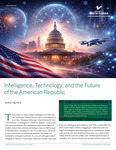
Technology has always shaped intelligence but never has the relationship between the two been as consequential as it is today. Emerging technology is transforming the four “core missions” of intelligence—collection, analysis, covert action, and counterintelligence. The intelligence organizations that traditionally conduct these missions are trying to keep up with the pace of transformation, including the role of non-state actors, especially private corporations, in introducing disruptive technology and tradecraft to intelligence activities. It is not just intelligence that is changing in response to technology. States and societies must adapt to the new intelligence environment as well. This is particularly true of the United States, which is struggling to balance the dual challenges of intelligence and technology with its constitutional system, political economy, and foundational principles. As a result, policy-makers and the American people must confront questions that not only affect U.S. national security but also the American way of life.
Publication Date
2-18-2026
Keywords
Intelligence, emerging technology, national security, artificial intelligence, AI, unmanned autonomous vehicles, UAVs, autonomous systems, intelligence analysis, defense technology
Recommended Citation
Rogg, Jeffrey P., "GNSI Decision Brief: Intelligence, Technology, and the Future of the American Republic" (2026). GNSI Decision Briefs. 36.
https://digitalcommons.usf.edu/gnsi_decision_briefs/36
DOI
https://doi.org/10.5038/BPVY2402
