-

Migratory Tactics and Wintering Areas of Northern Gannets (morus Bassanus) Breeding in North America
David A. Fifield, William A. Montevecchi, Stefan Garthe, Gregory J. Robertson, Ulrike Kubetzki, and Jean-François Rail
Migration has evolved to allow organisms to undertake life-history functions in the most appropriate place at the most appropriate time. Migration creates seasonal ecological linkages that have important implications for survival, population dynamics, response to climate change, and conservation. Although advances in bird-borne tracking technology have promoted knowledge of avian migratory ecology, major information gaps remain for most avian species, including seabirds. Ours is the first study to electronically track the migration and wintering of Northern Gannets (Morus bassanus; hereafter "gannets") from almost all of their North American breeding range, in multiple years and with multiple tracks from individual birds.
Gannets used distinct wintering areas and aggregated in several major hotspots. Most adults remained along the northeast North American coast, and breeding populations displayed only weak migratory connectivity. Unexpectedly, the Gulf of Mexico was revealed to be an important wintering area for adults. Individual gannets displayed remarkable winter-site fidelity with extensive range overlap across years. Timing, rates of movement, and use of stopovers during migration depended strongly on winter destination and also on sex, colony, and year. Females left the colony prior to males in fall, but, contrary to expectation, earlier spring arrival of males was not detected. Variation in seasonal constraints was emphasized by faster and shorter spring migrations compared with fall. Migratory duration, distance, and timing of arrival and departure from the winter grounds were all repeatable, suggesting strong individual conservation in these traits, while variability in the timing of colony departure and arrival, migratory speed, and the extent of stopovers en route imply greater environmental influences on these behaviors.
Three of 46 gannets displayed a radically different round-trip migration and overwinter strategy by undertaking the first recorded (and repeated), round-trip trans-Atlantic migrations to the coast of Africa, where gannets breeding in Europe overwinter. Trans-Atlantic crossings were as rapid as 5 days. Gannets breeding at all of the North American colonies located in easternmost Canada in Newfoundland made trans-Atlantic migrations. This contrasts with no such crossings by a much larger sample of gannets breeding in the species' largest North American colony (Bonaventure Island) in the Gulf of St. Lawrence. Similar trans-Atlantic migrations have not been recorded in the well-studied European colonies. The discovery of this trans-Atlantic connection has implications for interaction, connectivity, and phylogeographic radiation between the eastern and western Atlantic populations and suggests that migratory animals have a surprising capacity for successful movement beyond their known migrations.
We discuss our results in the broader context of seabird migration. The observed patterns of migratory timing and scale-dependent connectivity present a novel opportunity to assess the ecological and conservation implications during migration and on the wintering grounds. The overall weak connectivity suggests that gannets, as a population, may have the capacity to respond to modest environmental change. However, the repeatability of some characters implies that any response may be slow because the population will respond, but not necessarily the individuals. The lability of migratory tactics in the population as a whole combined with remarkable individual consistency in some, but not all, migration parameters offers rare insight into the relative contributions of genetic and environmental factors controlling migration. Received 31 January 2013, accepted 25 April 2013. Key words: geolocators, migration tactics, migratory connectivity, Northern Gannet, site fidelity, winter areas.
-
Sex and Age Differences in Site Fidelity, Food Resource Tracking, and Body Condition of Wintering Kirtland's Warblers (setophaga Kirtlandii) in the Bahamas
Joseph M. Wunderle Jr., Patricia K. Lebow, Jennifer D. White, Dave Currie, and David N. Ewert
Distribution of nonbreeding migrant birds in relation to variation in food availability has been hypothesized to result from the interaction of dominance hierarchies and variable movement responses, which together may have sex- and age-specific consequences. We predicted that site fidelity, movements, and abundance of Kirtland's Warblers (Setophaga kirtlandii) wintering on the island of Eleuthera in the Commonwealth of the Bahamas (hereafter "The Bahamas") would be correlated with food abundance but vary by sex and age. We found that the species' food resources (fruits and arthropods) typically declined during a winter but varied between winters (years) and study sites. Rainfall is a driver of variation in fruit abundance, as indicated by an information-theoretic evaluation of abiotic factors that influence fruit abundance. Despite variation in food availability, the proportions of fruits and arthropods in the diet of Kirtland's Warblers (88% of 90 fecal samples with both) varied little within or between winters or with sex or age class. Overwinter site persistence was low and variable among study sites (average = 43%, range: 11-67%); as predicted, site fidelity within and between winters differed by sex (males > females) and age class (adults > juveniles). However, knowledge of only sex and age was insufficient to predict site persistence in a model-selection framework in the absence of other contributing variables from the confidence set of models (i.e., food resources and/or habitat structure) for two model sets. These analyses further indicated that measures of food resources, either foliage arthropods or fruits, were reliable positive predictors of site fidelity, given the respective confidence set of models. Birds that shifted between study sites within a winter moved to sites with higher biomass of ripe fruit and ground arthropods, such that late-winter densities of Kirtland's Warblers were positively related to the biomass of fruits and ground arthropods. Sex and age differences in corrected body mass and fat were significant from midwinter through late winter, consistent with expected outcomes of dominance and experience. Differences in corrected body mass were evident by 16 April, when males had greater corrected mass than females, and by 26 April, when corrected mass of males was greater for adults than for juveniles. Late-winter rain had a positive effect on corrected body mass, corraborating previous Kirtland's Warbler studies that showed carryover effects on the breeding grounds and that survival in the following year was positively correlated with March rainfall in The Bahamas. Given that drought reduces the food resources and body condition of Kirtland's Warblers in The Bahamas, which negatively affects survival and breeding of Kirtland's Warblers in North America, conservation efforts in the Bahamas archipelago should focus on protecting the least-drought-prone early-successional habitats and sites with favored fruit species. Received 23 September 2012, accepted 8 October 2013.
-

Predictors of Juvenile Survival in Birds
Terri J. Maness and David J. Anderson
The survival probability of birds during the juvenile period, between the end of parental care and adulthood, is highly variable and has a major effect on population dynamics and parental fitness. As such, a large number of studies have attempted to evaluate potential predictors of juvenile survival in birds, especially predictors related to parental care. Lack's hypothesis linking body reserves accumulated from parental care to the survival of naive juveniles has organized much of this research, but various other predictors have also been investigated and received some support. We reviewed the literature in this area and identified a variety of methodological problems that obscure interpretation of the body of results. Most studies adopted statistical techniques that missed the opportunities to (1) evaluate the relative importance of several predictors, (2) control the confounding effect of correlation among predictor variables, and (3) exploit the information content of collinearity by evaluating indirect (via correlation) as well as direct effects of potential predictors on juvenile survival. Ultimately, we concluded that too few reliable studies exist to allow robust evaluations of any hypothesis regarding juvenile survival in birds. We used path analysis to test potential predictors of juvenile survival of 2,631 offspring from seven annual cohorts of a seabird, the Nazca Booby (Sula granti). Fledging age was the most important predictor of juvenile survival: fast-growing offspring survived best, when all other variables were held constant. Offspring sex was the next most important predictor, with juvenile males (the smaller sex) surviving better than females. Hatching day, an index of body weight, and wing length also showed important predictive ability, but cohort size, culmen length, and an index of clutch size and hatching success did not. Nestling growth was compromised under poor rearing conditions: overall weight fell, the number of days needed to reach fledging status increased, and the growth of some structures, but not others, was reduced. These effects were more pronounced in females, and the higher juvenile mortality of females accounts for most of the male bias in the adult sex ratio and its attendant "mate rotation" mating system in this population. Most previous studies did not evaluate sex as a potential predictor of juvenile survival. Had we omitted sex from our models, we would have made two erroneous conclusions: that weight did not influence juvenile survival, and that small structural size enhanced it. Received 17 May 2012, accepted 8 February 2013.
-

Ecology of Willow Flycatchers (empidonax Traillii) in the Sierra Nevada, California: Effects of Meadow Characteristics and Weather on Demographics
Heather A. Mathewson, Michael L. Morrison, Helen L. Loffland, and Peter F. Brussard
Population declines in songbirds are often attributed to regional habitat loss and fragmentation caused by land-use practices, which might be further aggravated by climate change. These concerns are particularly evident in the Intermountain West, where riparian areas are considered a priority for conservation because of predicted reductions in winter precipitation and increases in spring temperatures. These climatic changes might increase the susceptibility of species reliant on riparian areas to regional extirpation from loss of habitat. The Willow Flycatcher (Empidonax traillii) is a California species of concern because of precipitous population declines in the past three decades. In 1997, we established a long-term research program to determine population demographics and the effects of weather events and regionalscale meadow distribution and vegetative structure on nesting success of Willow Flycatchers. We monitored territory establishment and reproductive success of 786 territories and 850 nests in meadows distributed south and north of Lake Tahoe, California, from 1997 to 2008. We documented near extirpation of Willow Flycatchers south of the lake and a declining trend in the number of territories north of the lake. Late-spring storms and low temperatures at the start of the breeding season reduced the length of the breeding season, affecting the ability of Willow Flycatchers to renest. Nest age better predicted nest survival than meadow-scale landscape and weather variables. Although weather parameters were not significant as a direct influence on nest survival analyses, our results suggested a weak negative relationship with increased snowfall. For our nest-scale model evaluation, over-nest vegetation concealment increased nest survival in large meadows but had little effect on nest survival in smaller meadows. Evidence from our dispersal data implied that Willow Flycatchers in our study regions had high natal- and breeding-site fidelity, which suggests that recruitment across these study regions might be limited. Given that we observed a declining population trend in the South Tahoe region, our results suggest that populations in the South Tahoe region may not rebound. Compared with a reference site that we established in 2003, where the population of Willow Flycatchers appeared to be stable, reproductive success was lower at our long-term sites. We suggest that differences in breeding-season length and the quality of habitat in meadows contributed to lower reproductive success and to the observed population declines.
Keywords: California, Empidonax traillii, population change, reproductive success, Sierra Nevada, weather, Willow Flycatcher.
-

Diversity, Prevalence, and Host Specificity of Avian Plasmodium and Haemoproteus in a Western Amazon Assemblage
Maria Svensson-Coelho, John G. Blake, Bette A. Loiselle, Amanda S. Penrose, Patricia G. Parker, and Robert E. Ricklefs
We used PCR and DNA sequencing to screen for haemosporidian parasites (Haemoproteus and Plasmodium) in 2,488 individual birds from 104 species and 22 families, primarily understory suboscine passerines, captured in a lowland Amazonian forest in Ecuador as a first major step to understanding the transmission dynamics of this cosmopolitan group of parasites in this region. To assess diversity of avian haemosporidia in our study site, we identified putative evolutionary lineages of haemosporidia using the mtDNA gene cytochrome b (cyt b). We sampled birds over 9 years, which allowed us to assess annual variation in haemosporid- ian prevalence. Additionally, we investigated among-species variation in prevalence and tested relationships between traits of hosts and prevalence of haemosporidia in a comparative analysis. Finally, we estimated host specificity of each recovered parasite lineage and compared several indices with different details of host information. Prevalence of haemosporidia was 21.7% when we combined years and ranged from 5.6% to 91.2% among well-sampled host species. Prevalence varied significantly among years, ranging from 14.5% in 2006 to 33.2% in 2009. The hypothesis that haemosporidian prevalence increases with level of sexual dimorphism and decreases with foraging height of a host species received some support. We identified 65 unique cyt b haplotypes, some of which we considered variation within the same evolutionary lineage. In total, we defined 45 putative evolutionary lineages based on 363 identified parasites. Fourteen haplotypes were identical to haplotypes found elsewhere, sometimes on different continents. Host specificity varied greatly among parasite lineages. Collectively, our findings indicate that within a local Neotropical assemblage of avian haemosporidia, community organization is highly complex and part of this complexity can be attributed to differences in host life history; diversity, particularly of Plasmodium spp., is high; and individual parasite lineages can differ greatly in both abundance and number of host species. Received 15 August 2012, accepted 1 March 2013.
Key words: avian blood parasites, avian malaria, community ecology, compound community, Neotropics, parasite diversity, parasite prevalence.
-

Introduction to the Skeleton of Hummingbirds (aves: Apodiformes, Trochilidae) in Functional and Phylogenetic Contexts
Richard L. Zusi
Historically, comparative study of the skeleton of hummingbirds has focused on systematics, emphasizing differences between hummingbirds and other birds and only rarely addressing differences within Trochilidae. This monograph covers both approaches, and comparisons within Trochilidae are framed within recently published, plausible phylogenetic hypotheses. The data are derived mainly from museum collections of anatomical specimens, covering ~256 species of 102 genera of hummingbirds, and 11 genera of other Apodiformes. Although the syringeal skeleton is included, emphasis is on the axial and appendicular skeletons.
The first section deals with the syrinx and with skeletal features mainly associated with nectarivory and hovering, emphasizing characters that are unique to hummingbirds within Apodiformes. The syrinx of hummingbirds lies in the neck rather than the thorax and displays a unique bony knob on the surface of the tympanic membrane. During posthatching development, the upper jaw of hummingbirds undergoes metamorphic changes that produce a morphology uniquely adapted for nectarivory within Aves. The ventral bars of the upper jaw lengthen and rotate to become lateral walls of an incompletely tubular bill that is completed by the closed mandibula, and lateral bowing (streptognathism) of the mandibula helps to seal the tube while a bird drinks nectar. Streptognathism of the opened jaw is used in display by some Hermits. The lamellar tip of the tongue required for nectar uptake also develops after fledging, while young are still fed by the parent. In Trochilines the nasal region changes from its configuration by bone resorption during posthatching development. Cranial kinesis in hummingbirds is poorly documented, but structural differences in the upper jaw of Hermits and Trochilines imply differences in cranial kinesis. The palatum of hummingbirds is distinguished from that of other apodiforms by extreme reduction of the lateral part of the palatinum, greater width of the ventral choanal region, and by a median spine on the vomer. Otherwise the vomer is variable in shape and not compatible with aegithognathism. Among cranial features, the basipterygoid process, lacrimale, and jugale are absent, and the interorbital septum is complete. The hyobranchial apparatus differs from that of other apodiforms in having an epibranchiale that is longer than the ceratobranchiale, and variably elongate in relation to body size. I hypothesize two modes of hyobranchial function—one applicable to moderate protrusion of the tongue (typical nectar eating), and another to extreme protrusion. The pelvis is less strongly supported by the synsa- crum, and the proximal portion of the hind limb is more reduced than in other Apodiformes. By contrast, the tarsometatarsus and flexor muscles of the toes are well developed in association with perching and clinging. In the flight mechanism, features uniquely pertinent to hovering are distinguished from those that support stiff-winged flight—the latter common to both swifts and hummingbirds. Hovering is especially dependent on adaptations for axial rotation of the wing at all major joints, and on extreme development in hummingbirds of the unusual wing proportions (short humerus and forearm, and long hand) and enlarged breast muscles found in swifts. Osteological characters of the Oligocene fossil Eurotrochilus that can be compared with modern hummingbirds do not indicate nectarivory or sustained hovering in that taxon.
In the second section, variations within Trochilidae are described and their distributions within the major clades (Hermits, Topazes, Mangoes, Brilliants, Coquettes, Patagona, Mountain Gems, Bees, and Emeralds) are specified. Most diverse are the jaw mechanism, nasal region and con- chae, hyobranchial apparatus, cranial proportions, crests, and pneumatic inflation, structure of the ribcage based on number of ribs attached to the sternum, pectoral girdle, and various humeral characters. Other noteworthy but largely unexplained variation characterizes the hyobranchial apparatus of Heliodoxa, the humerus of the "Pygmornis group" of Phaethornis, sexual dimorphism in numbers of thoracic ribs, and synostosis of phalanges of the foot. Although Hermits display distinctive characters, their subfamily status is uncertain for lack of informative outgroups. Major trochilid clades are either weakly supported or unsupported by uniquely derived characters, but apomorphic variation within Mangoes suggests recognition of an Anthracothorax group of genera, and within Emeralds, a large Amazilia group. Each of the major trochilid clades displays considerable diversity in body size and skeletal characters, and numerous characters show parallel evolution within the family. Intraspecific variation is widespread, and selected examples are highlighted. Patterns of skeletal variations at multiple levels of phylogeny suggest that some variations characterizing higher levels had their origins at the intraspecific level.
A list of unsolved problems of functional morphology of the skeleton in hummingbirds is offered. Especially intriguing are the many posthatching changes in development of the feeding mechanism and the challenge of incorporating morphological data and their implications into models of evolution of hummingbird communities. Received 17 September 2012, accepted 8 February 2013.
-

Ecogeographic Patterns of Morphological Variation in Elepaios (chasiempis Spp.): Bergmann's, Allen's, and Gloger's Rules in a Microcosm
Eric A. VanderWerf
Animals often exhibit predictable geographic variation in morphology, and such ecogeographic patterns reflect local adaptation to varying environmental conditions. The most common of these patterns are termed Bergmann's, Allen's, and Gloger's rules. I studied morphological variation in the Hawaii Elepaio (Chasiempis sandwichensis) and the Oahu Elepaio (C. ibidis), forest birds endemic to the Hawaiian Islands. I measured body size and plumage color of 223 live elepaios captured at 36 sites on Hawaii and 132 live elepaios captured at 23 sites on Oahu, and I examined 132 museum specimens from an additional 22 locations on Hawaii. I used multiple regressions to examine relationships of elepaio body size and plumage color to elevation and annual rainfall on each island. Size of Hawaii Elepaios varied among sites and was related to elevation and rainfall. Wing chord, tail length, and body mass had positive relationships with elevation, as predicted by Bergmann's rule. Proportional bill length and proportional tarsus length were inversely related to elevation, as predicted by Allen's rule. In Hawaii Elepaios, 17 of 20 plumage color variables were related to rainfall. Elepaios in wetter areas were more heavily pigmented and had fewer and smaller white markings, as predicted by Gloger's rule. Plumage color of Oahu Elepaios showed similar but weaker patterns and only two of 20 plumage characters were related to rainfall. All body-size and plumage-color measurements had smoothly clinal distributions, with no large gaps with respect to elevation or rainfall. Putative subspecies of the Hawaii Elepaio differed in mean value of several plumage characters, but there was overlap in plumage color among subspecies and variation within them, and none of the three subspecies was diagnosable from both other subspecies by any plumage character using the 75% rule. Elepaios differed morphologically among sites only a few kilometers apart because of their sedentary behavior and the steep gradients in temperature and elevation and limited climatic variation of the tropical environment of the Hawaiian Islands. Morphological variation in elepaios is smoothly clinal because there are few dispersal barriers and elepaios inhabit areas with a range of climates and vegetation. Although my results did not support the designation of subspecies within the Hawaii Elepaio, morphological and underlying genetic variation is important, and conservation of elepaios with varying phenotypes would preserve evolutionary potential and ability to adapt to climate change. Received 28 July 2010, accepted 28 July 2011.
Key words: Chasiempis, ecogeographic variation, elepaio, environmental gradients, local adaptation, morphological variation, subspecies diagnosis.
-

Are Wild Birds Important in the Transport of Arthropod-borne Viruses?
Charles R. Brown and Valerie A. O'Brien
The encephalitic arthropod-borne viruses (arboviruses) can cause a variety of serious human and wildlife diseases, including eastern equine encephalomyelitis, western equine encephalomyelitis, St. Louis encephalitis, Japanese encephalitis, and West Nile neuroinvasive disease. Understanding how these pathogens are dispersed through the environment is important both in managing their health-related impact and in interpreting patterns of their genetic variability over wide areas. Because many arboviruses infect wild birds and can be amplified to a level that makes birds infectious to insect vectors, numerous workers have suggested that the movements of migratory birds represent a major way that these viruses can be transported on a local, continental, and intercontinental scale. Virus transport by birds can, in theory, explain the colonization of new geographic regions by arboviruses, why some arboviruses in widely separated areas are genetically similar, and how arboviruses annually recur in temperate latitudes following interrupted transmission during the winter months. The four scenarios in which a bird could transport an arbovirus include (1) a viremic bird moving while it maintains a viremia sufficient to infect an arthropod that feeds on it at a new locale; (2) a bird previously infected by an arbovirus maintaining a chronic, low-level virus infection that, perhaps because of the stresses associated with annual movement, recrudesces to produce a viremia high enough to infect an arthropod at a new locale or at a different time of year; (3) an infected bird moving and then directly transmitting the virus to other animals either by being preyed upon or scavenged or when other birds contact its saliva or feces; and (4) a bird transporting virus-infected arthropods that drop off at a new location. The idea that birds spread arboviruses is based largely on records of virus-positive birds of unknown movement status caught during the migration season, serological data showing that migrant birds were exposed to virus in the past, and indirect inferences about arbovirus movement based on patterns of genetic variation in viruses in different geographic locations. We review the direct and indirect evidence for these scenarios. Although there are a few records of migrant birds having moved arboviruses over long distances, we conclude that there is no strong empirical evidence that wild birds play a major role in the dispersal of these pathogens at the continental or intercontinental levels or that arboviruses routinely become established at new foci or are seasonally reintroduced into established foci as a result of transport by birds. Additional field and laboratory studies on how virus infection directly affects a bird's likelihood of moving are needed. Researchers interested in virus transport should focus on the extent to which birds move viruses locally and how local transport contributes to arbovirus dispersal more generally, whether virus-infected arthropod vectors disperse long distances, and the extent to which arboviruses are maintained at established foci through vertical transmission and overwintering by adult vectors. Unjustified assumptions that wild birds disperse pathogens could negatively affect the conservation of many migratory species throughout the world and cause public health resources to be diverted into ineffective ways to predict or prevent disease spread. Received 7 May 2009, accepted 27 August 2010.
-

An Alphataxonomic Revision of Extinct and Extant Razorbills (aves, Alcidae): a Combined Morphometric and Phylogenetic Approach
N. Adam Smith and Julia A. Clarke
Alca (Aves, Alcidae) has a comparatively rich fossil record with respect to other Charadriiformes, consisting of thousands of specimens. Despite the abundance of fossil material, species richness in this clade has remained poorly understood, primarily because of the paucity of associated specimens. To address this issue, a combined morphometric and apomorphy- based method was developed that would allow referral of fragmentary and isolated specimens, which constitute ~97% of the Alca fossil record. Measurements of multiple variables from >2,000 Alca fossils were categorized by hierarchical cluster analysis and resulted in the recognition of "species clusters." Discriminant function analysis was used to assess statistical support for these clusters and to identify the most informative measurements with respect to discriminating between species on the basis of size. The reliability of this method was tested using the same measurements taken from 13 extant alcid species and was found to be robust with respect to the accurate recovery of species-correlated groups of measurement data. With the exception of the similarly proportioned Alca carolinensis sp. nov. and A. olsoni sp. nov., the holotype specimens of all Alca species were recovered in separate, statistically supported clusters. These clusters of fossils were then evaluated for the presence of diagnostic morphological features, resulting in the recognition of three new Alca species. In contrast to previously described Alca species, two new species are described from holotype specimens that are associated partial skeletons. These associated specimens facilitated referral of isolated fossil material and phylogenetic estimation of Alca relationships. Amended diagnoses for Alca species are proposed, and 203 humeri are referred to species on the basis of unique suites of characters and size ranges identified through these analyses. This method has potential for assessing species diversity in other taxa known from abundant fragmentary and/or isolated remains.
The combined phylogenetic analysis includes the three new species described herein, nine extinct species in Alcini that have not been phylogenetically analyzed before, and six other extant or recently extinct (i.e., Great Auk [Pinguinus impennis]) Alcini species. The character matrix includes osteological characters and previously published molecular sequence data (ND2, ND5, ND6, CO1, CYTB, 12S, 16S, RAG1). The results support the monophyly of an Alca + Pinguinus clade recovered as the sister taxon to a clade composed of Uria, Miocepphus, and Alle.
The description of three new species of auk from the Early Pliocene Yorktown Formation of North Carolina nearly doubles the number of known species in Alca, makes Alca the most speciose clade of Atlantic alcids, and supports previous hypotheses of high species richness in this clade. The sole extant species, the Razorbill Auk (Alca torda), may accordingly be viewed as the only survivor of a diverse Atlantic Ocean clade that was species-rich a mere 4 million years ago. These new fossils refine our knowledge of alcid paleodiversity, provide information regarding ancestral osteological states within Alca, and allow for increased understanding of radiation, extinction, and biogeography within this clade. Received 4 October 2010, accepted 8 April 2011.
Key words: Alca, auks, Cenozoic, climate change, fossil birds, intraspecific variation, systematics.
-

Thomas R. Howell's Check-list of the Birds of Nicaragua as of 1993
Thomas R. Howell
Between December 1951 and April 1967, Thomas R. Howell made 13 separate research trips to Nicaragua. The result was a collection of over 2,000 bird skins and at least 16 publications that form the backbone of Nicaraguan ornithology. In the late 1970s, Howell began working on a manuscript that was intended to be his major contribution to the ornithology of the country. The first version of this "Check-list of the Birds of Nicaragua" was not ready until 1983, and many different typewritten versions circulated among a small but growing number of Nicaraguan biologists for the next two decades. Partly because of Howell's passion for detail and completeness, and finally because of his failing health in the late 1990s, the check-list was never published before his death in December 2004. This monograph remedies what had become a significant obstacle to further studies in the country by providing, in Howell's own words, a comprehensive background for subsequent explorations. It documents the 654 species (611 supported with specimen evidence) known to have occurred in Nicaragua as of 1993, the date of the last substantial revision of the manuscript, and also provides a rationale for anticipating another 44 species. The publication of this significant chapter in the history of Central American bird studies is offered both as a tribute to Tom Howell's enthusiasm and contributions and as a frame of reference and springboard for current and future ornithologists inspired to study the rich and still largely unexplored avifauna of Nicaragua.
Key words: biogeography, Central America, distribution, history of ornithology, James Silliman, Ludlow Griscom, subspecies, W. B. Richardson, W. DeWitt Miller.
-

On the Origin of Species through Heteropatric Differentiation: a Review and a Model of Speciation in Migratory Animals
Kevin Winker
Differentiation and speciation without extended isolation appear to be common among migratory animals. Historical oversight of this is probably due to temporal distortion in distribution maps and a tendency to consider that lineages had different historical traits, such as being sedentary or much less mobile. Mobility among cyclic migrants makes population isolation difficult, and diminished levels of intraspecific differentiation occur in avian migrants (I term this "Montgomery's rule"). Nevertheless, many lineages have differentiated despite increased mobility and a high propensity for gene flow, conditions that speciation theory has not addressed adequately. Populations of seasonal migrants usually occur in allopatry and sym- patry during a migratory cycle, and this distributional pattern (heteropatry) is the focus of a model empirically developed to explain differentiation in migratory lineages. Divergence arises through disruptive selection from resource competition and heterogeneously distributed cyclic resources. Heteropatric speciation is a type of ecological speciation in which reproductive isolation increases between populations as a byproduct of adaptation to different environments that enhances breeding allopatry and allochrony despite degrees of sympatry that occur during the nonbreeding period in migration cycles. Mating or pair bonding in nonbreeding areas is rare. Patterns such as leapfrog migration and limited morphological divergence suggest that differentiation is driven by these ecological factors rather than by sexual selection or nontemporal changes in the resource base itself, although the additional presence of either of the latter would have additive divergent effects. Migratory lineages provide a largely neglected series of natural experiments in speciation in which to test predictions stemming from this model and others focusing on ecological speciation.
Key words: adaptation, allopatric speciation, cyclic migration, ecological speciation, leapfrog migration, migratory lineages, sympatric speciation.
-

Cladistics and the Origin of Birds: a Review and Two New Analyses
Frances C. James and John A. Pourtless IV
The hypothesis that birds are maniraptoran theropod dinosaurs (the "BMT hypothesis") has become widely accepted by both scientists and the general public. Criticism has usually been dismissed, often with the comment that no more parsimonious alternative has been presented with cladistic methodology. Rather than taking that position, we ask here whether the hypothesis is as overwhelmingly supported as some claim. We reanalyzed a standard matrix of 46 taxa and 208 characters from a recent paper by Clark, Norell, and Makovicky, and we found statistical support for the clades Coelurosauria and Maniraptoriformes and for a clade of birds and maniraptorans. Note, however, that because the matrix contains only birds and theropods, it assumes that the origin of birds lies within the Theropoda. In addition to this problem, Clark et al.'s (2002) matrix contains problematic assumptions of homology, especially in the palate, basipterygoid, manus, carpus, and tarsus. In an attempt to avoid these two major problems and to evaluate the BMT hypothesis and four alternative hypotheses in a comparative phylogenetic framework, we followed the recommendations of Jenner, Kearney, and Rieppel by constructing and analyzing a larger but more conservative matrix. Our matrix includes taxa from throughout the Archosauria. When the ambiguous characters were excluded, parsimony analyses with bootstrapping and successive pruning retrieved a weak clade of birds and core maniraptorans (ovirap- torosaurs, troodontids, and dromaeosaurs) that also contained the early archosaur Longisquama and was not unambiguously associated with other theropods. When the ambiguous characters were included but coded as unknown where appropriate, the results were virtually identical. Kishino-Hasegawa tests revealed no statistical difference between the hypothesis that birds were a clade nested within the Maniraptora and the hypothesis that core clades of Maniraptora were actually flying and flightless radiations within the clade bracketed by Archaeopteryx and modern birds (Aves). Additional statistical tests showed that both the "early-archosaur" and "cro- codylomorph" hypotheses are at least as well supported as the BMT hypothesis. These results show that Theropoda as presently constituted may not be monophyletic and that the verification- ist approach of the BMT literature may be producing misleading studies on the origin of birds. Further research should focus on whether some maniraptorans belong within Aves, and whether Aves belongs within Theropoda or is more closely related to another archosaurian taxon. At present, uncertainties about the hypothesis that birds are maniraptoran theropods are not receiving enough attention. Received 28 July 2008, accepted 25 January 2009.
-

Reproduction and Immune Homeostasis in a Long-lived Seabird, the Nazca Booby (sula Granti)
Victor Apanius, Mark A. Westbrock, and David J. Anderson
The evolution of longevity requires that the marginal investment in selfmaintenance at the expense of reproductive effort is favored by realizing a longer reproductive lifespan. This can occur when extrinsic mortality factors (weather, predators, etc.) are less important than intrinsic mortality factors, such as the physiological cost of reproduction. Long-lived pelagic seabirds have low annual reproductive output and prolonged offspring growth periods that are thought to have evolved to accommodate marine resource variability. The life-history theory of senescence predicts that these same taxa should minimize per diem reproductive costs and shift effects of resource variability to the offspring. To address this prediction, we measured parental effort, offspring growth, and one aspect of self-maintenance (serum immunoglobulin G concentration [IgG]) in a long-lived pelagic seabird, the Nazca Booby (Sula granti). We collected data on 38 families in the 2002-2003 breeding season on Isla Española, Galapagos Islands, Ecuador. Offspring body-mass growth showed variable trajectories, but a variable nestling period allowed similar (sex-specific) fledging mass to be attained. Growth of two structural traits was most variable when the traits were growing most rapidly, but again attained sex-specific targets at fledging. Offspring [IgG] showed marked inter-individual variation, but the ontogeny of [IgG] was unrelated to morphological growth. Mothers spent more time at sea than fathers, and both parents spent more time at sea for offspring of the larger (female) sex at the time of peak body mass. Foraging effort did not show consistent inter-individual variation but was correlated between pair members. Sex-specific body mass of the parents showed consistent inter-individual variation as it declined across the nestling period, with a greater decline in parents raising daughters. In parents, [IgG] was stable across the nestling period and was correlated among family members.
The plasticity of offspring growth and the consistency of self-maintenance of the parents accord with the predictions of the life-history theory of senescence. To our knowledge, this is the first study to use a longitudinal analysis to assess intra- and inter-individual variation in parental effort, offspring growth, and a measure of immune-mediated self-maintenance in a wild vertebrate population. Received 7 December 2006, accepted 6 July 2007.
-

Conservation of Grassland Birds in North America: Understanding Ecological Processes in Different Regions
Robert A. Askins, Felipe Chavez-Ramirez, Brenda C. Dale, Carola A. Haas, James R. Herkert, Fritz L. Knopf, and Peter D. Vickery
Many species of birds that depend on grassland or savanna habitats have shown substantial overall population declines in North America. To understand the causes of these declines, we examined the habitat requirements of birds in six types of grassland in different regions of the continent. Open habitats were originally maintained by ecological drivers (continual and pervasive ecological processes) such as drought, grazing, and fire in tallgrass prairie, mixed-grass prairie, shortgrass prairie, desert grassland, and longleaf pine savanna. By contrast, grasslands were created by occasional disturbances (e.g., fires or beaver [Castor canadensis] activity) in much of northeastern North America. The relative importance of particular drivers or disturbances differed among regions. Keystone mammal species—grazers such as prairie-dogs (Cynomys spp.) and bison (Bison bison) in western prairies, and dam-building beavers in eastern deciduous forests — played a crucial, and frequently unappreciated, role in maintaining many grassland systems. Although fire was important in preventing invasion of woody plants in the tallgrass and moist mixed prairies, grazing played a more important role in maintaining the typical grassland vegetation of shortgrass prairies and desert grasslands. Heavy grazing by prairie- dogs or bison created a low "grazing lawn" that is the preferred habitat for many grassland bird species that are restricted to the shortgrass prairie and desert grasslands.
Ultimately, many species of grassland birds are vulnerable because people destroyed their breeding, migratory, and wintering habitat, either directly by converting it to farmland and building lots, or indirectly by modifying grazing patterns, suppressing fires, or interfering with other ecological processes that originally sustained open grassland. Understanding the ecological processes that originally maintained grassland systems is critically important for efforts to improve, restore, or create habitat for grassland birds and other grassland organisms. Consequently, preservation of large areas of natural or seminatural grassland, where these processes can be studied and core populations of grassland birds can flourish, should be a high priority. However, some grassland birds now primarily depend on artificial habitats that are managed to maximize production of livestock, timber, or other products. With a sound understanding of the habitat requirements of grassland birds and the processes that originally shaped their habitats, it should be possible to manage populations sustainably on "working land" such as cattle ranches, farms, and pine plantations. Proper management of private land will be critical for preserving adequate breeding, migratory, and winter habitat for grassland and savanna species. Received 12 December 2006, accepted 24 April 2007.
-

Storm-petrels of the Eastern Pacific Ocean: Species Assembly and Diversity along Marine Habitat Gradients
Larry B. Spear and David G. Ainley
Residing in waters just west of the Americas, in a roughly triangular area from about 50°N to 50°S and out along the equator, are 26 distinct taxa of storm-petrels (Hydrobatidae), a diversity far greater for this group than in any equivalent stretch of the world ocean. We sought to understand how so many forms can co-occur within this very poorly known family.
We describe the ranges, at-sea behavior, and marine habitat affinities of 22 (of the 26) distinct forms included within 5 (of 6) genera and 16 (of 20) species of storm-petrel, all of which occur in that portion of the Pacific Ocean that stretches from the California Current south through the Humboldt Current and out to 170°W along the equator. We base our analysis on data collected during 23 cruises conducted in the eastern Pacific during the period 1980-1995. We also provide, for the first time for most forms, information on the annual cycle, as well as abundance estimates based on at-sea censusing during both the breeding and nonbreeding periods. Such information is unknown for almost all populations of storm-petrels, unless their at-sea range has been thoroughly censused. We include the following storm-petrels in our analysis: Leach's (Oceanodroma leucorhoa; represented by a light-rumped form, O. l. leucorhoa, and several dark-rumped forms: O. l. socorroensis, O. l. cheimomnestes, and O. l. chapmani), Band-rumped (O. castro), Ashy (O. homochroa), Least (O. microsoma), Wedge-rumped (O. tethys; represented by two races: O. t. tethys and O. t. kelsalli), Black (O. melania), Markham's (O. markhami), Ringed (O. hornbyi), Wilson's (Oceanites oceanicus; represented by two races: O. o. oceanicus and O. o. chilensis), White-vented (Oceanites gracilis; represented by two races: O. g. gracilis and O. g. gala- pagoensis), White-bellied (Fregetta grallaria; represented by three races: F. g. grallaria, F. g. segethi, and F. g. titan), Black-bellied (F. tropica), White-throated (Nesofregetta fuliginosa), and Whitefaced (Pelagodroma marina; represented by two races: P. m. dulciae and P m. maoriana).
Information was gathered by strip censuses (400-600 m wide), observations of storm-petrel behavior along cruise tracks, and collection of specimens. Within the entire study area, we made 9,308.1 h of observation and surveyed 111,029 km2 of ocean, including 61,131 km2 in boreal spring-austral autumn and 49,898 km2 in boreal autumn-austral spring. Surveys included 768.3 h within 1,000 km of the South American coast; >11,203.7 km2 of ocean was surveyed, 7,382.1 km2 in austral autumn and 3,821.6 km2 in austral spring. Surveys within 500 km of North America included 2,557.2 h over 12,473 km2 in boreal spring and 3,061.3 km2 in boreal autumn. We also collected specimens during numerous stops where oceanographic studies were being conducted by other researchers who were also aboard the ship.
For the majority of taxa, our surveys covered the entire at-sea range of the taxon. We had complete coverage for the following storm-petrels: Ringed, White-vented, Markham's, O. t. segethi race of White-bellied, both races of Wedge-rumped, Galápagos race of Band-rumped (O. c. bangsi), races of dark-rumped Leach's (O. l. socorroensis, O. l. cheimomnestes, and O. l. chapmani), and Ashy. During boreal autumn, we also had nearly complete coverage for Black and Least storm-petrels, both of which vacate the Gulf of California after the breeding season. We also had nearly complete coverage of the Pacific range of the White-throated Storm-Petrel. Using generalized additive models, population estimation was quite satisfactory for these taxa.
Our results indicate that most storm-petrel taxa in the study area have robust populations, this report presenting the first estimates ever for most of the taxa treated. On the other hand, meager populations are indicated for Ashy and White-throated storm-petrels, for two races of White-bellied Storm-petrel (F. g. grallaria and F. g. titan), and for Band-rumped Storm-Petrels in Hawaii. All appear to have populations of <10,000 birds, especially in the case of the newly rediscovered (present study) but apparently nearly extinct population of F. g. titan on Rapa Island.
The eastern Pacific is oceanographically heterogeneous at the middle to large scale, and such heterogeneity with strong environmental gradients apparently contributes in a major way to the diversity of storm-petrels in the area. The occurrence patterns of all forms sorted along gradients, such as those for sea-surface temperature and salinity and thermocline depth and strength, all of which separate the major current systems and water masses in the region. Except for the three endemic storm-petrels of the Humboldt Current (White-vented, Ringed, and Markham's storm-petrels), species were further sorted at a smaller scale in accord with a habitat gradient from shelf to slope to pelagic waters. Gradients in ocean productivity correspond with, and are affected by, gradients in the above physical habitat features. Flight and foraging behavior also differentiated species ecologically. Finally, intense competition for nesting space is indicated for many taxa by clear evidence of "floating populations" (i.e., surpluses of breeding adults denied the chance to breed owing to lack of nesting space). In part, these surpluses are the result of intense competition for limited nesting space and are resolved by body size, with a size differential dictating what taxa can breed sympatrically (on the same island). At sea, especially in areas of high ocean productivity where habitats are more finely demarcated than elsewhere, storm-petrels sort by foraging habitat likely derived from trophic competition that was far more intense during glacial periods. At that time, continental shelves were much narrower and, therefore, depth-defined foraging zones were more closely packed than at present or throughout the Holocene. Where species co-occur at sea, the two factors that explain co-occurrence among most storm-petrel species are foraging habitat and body size, with competition for food being resolved by the latter, which affects prey size, as well as by foraging behavior. Overall, the high degree of speciation among storm-petrels of the eastern Pacific is likely a product of relatively sparse nesting islands sprinkled among a confluence of distinct water types separated by intense environmental and productivity gradients. Received 15 June 2005, accepted 19 September 2006.
-

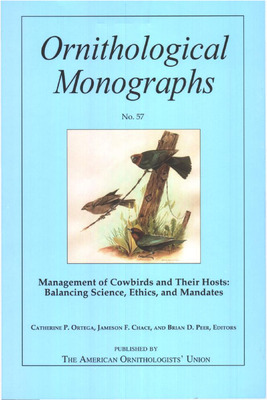
Management of Cowbirds and Their Hosts: Balancing Science, Ethics, and Mandates
Caterine P. Ortega, Jameson F. Chace, and Brian Do Peer
-

Population Dynamics of the California Spotted Owl (strix Occidentalis Occidentalis): a Meta-analysis
Alan B. Franklin, R. J. Gutierrez, James D. Nichols, Mark E. Seamans, Gary C. White, Guthrie S. Zimmerman, James E. Hines, Thomas E. Munton, William S. Lahaye, Jennifer A. Blakesly, George N. Steger, Barry R. Noon, Daniel W. Shaw, John J. Keane, Trent L. McDonald, and Susan Britting
Printing is not supported at the primary Gallery Thumbnail page. Please first navigate to a specific Image before printing.